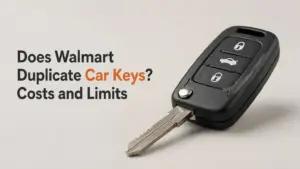
A replacement car key can be made without the original by using the vehicle identification number, proof of ownership, and the car’s mechanical and electronic key data. An automotive locksmith or dealership can cut a compatible key and program its transponder, remote, or proximity system. The key type and vehicle security system determine the final cost and time.
Key Facts at a Glance
A VIN identifies the vehicle, but a VIN alone does not guarantee that a key can be cut or programmed.
A locksmith usually needs a government photo ID and registration, title, or insurance document matching your name.
A metal blade and an electronic immobilizer are separate systems, so a key can unlock doors yet fail to start the engine.
Typical US replacement costs range from $20 for a basic duplicate to more than $600 for some proximity fobs.
Mobile automotive locksmiths often handle standard, transponder, and many smart keys at the vehicle’s location.
If a key was stolen, request deletion of the missing key from the vehicle’s immobilizer or key-memory system.
Before You Start: Documents, Time, and Cost
Replacing a car key without an original normally requires the vehicle, ownership documents, a working vehicle battery, and an automotive key provider with the correct programming equipment. Prepare these items before requesting quotes because a provider cannot safely verify the job from the make and model alone.
| Requirement | Specific example | Why the provider needs it |
|---|---|---|
| Vehicle identification number | 17-character VIN beginning with a manufacturer identifier | Confirms vehicle identity and may retrieve key data |
| Ownership document | Current registration, title, or insurance card | Establishes lawful possession |
| Government identification | Driver’s license or passport matching the documents | Prevents unauthorized key creation |
| Vehicle details | Year, make, model, trim, engine, and market | Separates similar key systems |
| Vehicle access | Car present at the service location | Required for most electronic programming |
| Battery condition | Approximately 12.4-12.7 volts when fully charged | Prevents interrupted programming |
Typical preparation takes 10-20 minutes if the registration and VIN are available. A mobile replacement appointment commonly takes 30-90 minutes, while a dealer order can take one to several business days for restricted or uncommon keys.
The price depends on the key technology, not merely the metal blade. A 2012 compact car with a transponder may cost less than a 2005 luxury vehicle with encrypted security, even though the older vehicle uses less visibly advanced hardware.
Where Is the VIN Located?
The VIN is usually visible through the lower driver-side windshield or on a label inside the driver’s door jamb. The VIN may also appear on the registration, title, insurance card, manufacturer app, or finance documents.
Verify every character before sending it to a provider. A single mistaken digit can produce the wrong vehicle record or prevent the provider from retrieving the correct key information.
How to Get a Replacement Car Key Without the Original
Follow a provider-based replacement process: identify the vehicle, prove ownership, classify the key, obtain an itemized quote, arrange cutting and programming, then test every function. The most important success factor is accurate vehicle and key-system identification, because a compatible-looking aftermarket fob may still contain the wrong chip, frequency, or firmware.
Step 1: Record the Vehicle Information
Write down the VIN, year, make, model, trim, license plate, and current location. Tell the provider whether the vehicle has a conventional ignition, a remote-headed key, a flip key, or push-button start.
You will know this step worked when the provider confirms the exact vehicle platform rather than quoting only from “2018 Toyota” or “2021 Ford.” Ask whether the quote includes the blade, transponder, remote buttons, programming, service call, and tax.
Common mistake: Guessing the model year from the purchase date. Model-year changes can use different key systems within the same body style.
Step 2: Gather Ownership Documents
Prepare a matching government photo ID and one ownership document, such as registration, title, or an insurance card. A leased or financed vehicle may require the registered lessee or lender-related documentation, depending on local policy.
You will know this step worked when the provider explains exactly which documents the technician will inspect. A legitimate professional should verify authorization before cutting or programming a security key.
Common mistake: Showing only a driver’s license. Identification proves who you are, but it may not prove that you are authorized to possess the vehicle.
Step 3: Identify the Key Technology
Classify the missing key from the vehicle’s controls and ignition. A physical ignition slot suggests a standard, transponder, laser-cut, or switchblade key; a start button usually indicates a proximity fob, although some vehicles also hide an emergency mechanical blade.
You will know this step worked when the provider states whether the job requires cutting, remote pairing, immobilizer registration, or all three.
Common mistake: Calling every electronic key a “remote.” A remote may operate door locks, while a transponder authorizes engine starting and a proximity fob can perform both functions.
Step 4: Request Itemized Quotes
Call at least two qualified automotive locksmiths and the local dealership parts or service department. Request separate prices for the key or fob, cutting, programming, mobile service, emergency hours, tax, and any required towing.
Ask each provider these questions:
- Is the quoted part new OEM, refurbished OEM, or aftermarket?
- Does the vehicle need all existing keys present for the programming procedure?
- Can the missing or stolen key be erased from memory?
- Does the provider support this exact model year and market?
- What happens if the supplied key cannot be programmed?
You will know this step worked when the quote contains a final price range and a stated warranty. A low headline price that excludes programming can become more expensive than a complete dealer quote.
Common mistake: Comparing a bare online-fob price with a complete mobile-service price.
Step 5: Have the Blade Cut by Code or Lock
A locksmith may cut the mechanical portion from an authorized key code, decode an accessible lock, or use manufacturer-provided information. The VIN may help retrieve the code, but some manufacturers restrict key-code access or require a dealer account.
A code-cut blade should turn the correct locks smoothly without excessive force. On some vehicles, the door and ignition cylinders may no longer match because a previous owner replaced one component.
Common mistake: Assuming the VIN always matches the current ignition. If the ignition was changed after manufacture, the factory code may produce a key that fits the doors but does not turn the ignition.
Step 6: Program the Electronic Security System
The technician registers the transponder, remote, or proximity fob using an approved diagnostic tool, manufacturer software, or a model-specific procedure. Many vehicles use the OBD-II connector, but some procedures use an immobilizer antenna, security gateway, PIN authorization, or a manufacturer server connection.
Programming may require one existing key, a security code, a two-key sequence, or the erasure and re-enrollment of all keys. The exact method varies by manufacturer, model year, region, and immobilizer generation.
You will know this step worked when the engine starts and the dashboard displays no immobilizer warning. Remote locking alone does not prove that the starting authorization was programmed.
Common mistake: Replacing the fob battery and assuming the key is programmed. A battery powers the transmitter; it does not enroll the immobilizer chip.
Step 7: Test Every Function Before Paying
Test the metal blade in the driver door and ignition, if present. Test lock, unlock, trunk release, panic, remote start, proximity entry, emergency-blade operation, and engine starting where equipped.
Ask the technician to show how to use the emergency key and how to replace the fob battery. Confirm that the new key is listed in the vehicle’s memory and ask whether old keys remain active.
Common mistake: Leaving after the engine starts without testing the trunk or mechanical override. A partially functional replacement can create a second lockout.
Which Type of Replacement Key Do You Need?
The key type determines the required equipment, programming method, price, and replacement time. Vehicle age provides a clue, but the manufacturer’s immobilizer design is more reliable than a simple pre-1995 or post-1995 rule.
| Key type | Identifying feature | Typical US total price | Typical service time |
|---|---|---|---|
| Basic mechanical key | Metal blade with no coded chip | $10-$50 | 10-20 minutes |
| Transponder key | Metal blade plus coded plastic head | $90-$250 | 20-60 minutes |
| Laser-cut or sidewinder key | Center groove and high-security profile | $150-$350 | 30-75 minutes |
| Remote or switchblade key | Buttons plus blade or flip mechanism | $150-$400 | 30-90 minutes |
| Proximity smart fob | Push-button start and keyless detection | $250-$600+ | 45-120 minutes |
Mechanical Keys
A mechanical key contains no electronic authorization, so a locksmith can generally duplicate or code-cut it without vehicle programming. Older cars, classic vehicles, some commercial equipment, and certain valet applications use this design.
Mechanical keys are inexpensive, but they may still require a restricted profile or a specialized blank. A copied key can unlock the door while failing to operate a worn ignition if the original lock is damaged.
Transponder Keys
A transponder key contains a passive chip that communicates with the immobilizer antenna near the ignition. The engine control system permits starting only after the chip’s coded response matches an enrolled key.
The blade and chip must both be correct. A locksmith can often cut and program these keys at the vehicle, but some newer systems require security credentials or online manufacturer authorization.
Laser-Cut and Switchblade Keys
Laser-cut, high-security blades use a precise groove or complex profile that ordinary key-cutting machines may not reproduce. Switchblade keys add a hinged blade and remote-control electronics, increasing the number of components that can fail.
Do not use the term “laser-cut” as proof of quality. Ask for the actual blade profile, chip type, remote frequency, and compatibility with the vehicle’s model year.
Smart and Proximity Fobs
A proximity fob communicates with antennas around the vehicle and authorizes push-button starting when the fob is inside the cabin. Many systems also include a hidden emergency blade for a dead fob battery or mechanical lock cylinder.
Smart-key replacement can require all existing fobs to be present because some procedures erase unrecognized keys. European luxury vehicles may require a dealer order, identity verification, and a manufacturer server transaction.
Locksmith or Dealership: Which Is Better?
A mobile automotive locksmith is usually the fastest and least expensive choice for common vehicles, while a dealership is safer for restricted, encrypted, luxury, or unusual systems. The correct decision depends on model coverage, required credentials, total price, and whether the car must be towed.
| Decision factor | Mobile locksmith | Dealership | Online seller |
|---|---|---|---|
| Common transponder key | $90-$250 typical | $150-$400 typical | $20-$150 hardware only |
| Smart-fob capability | Many mainstream models | Broad OEM coverage | No onsite programming |
| Location | Vehicle’s location | Dealer facility | Customer’s address |
| Typical completion | 30-120 minutes | Same day to several days | 2-10 days delivery |
| Ownership check | ID plus vehicle documents | ID plus vehicle documents | Often limited at purchase |
| Main risk | Incomplete equipment coverage | Higher labor and towing cost | Wrong frequency or unusable chip |
A provider should disclose credentials, business identity, warranty terms, and the final price before beginning work. Avoid anyone who requests no ownership documentation or promises to bypass the immobilizer.
When Should You Use a Mobile Locksmith?
Choose a mobile locksmith when the vehicle is stranded, the model is common, and the provider confirms support for the exact year and key system. Mobile service avoids a tow and usually combines cutting and programming at the vehicle.
Mobile service is not automatically suitable for every car. Some encrypted BMW, Mercedes-Benz, Land Rover, Audi, and Porsche systems may require dealer ordering, online authorization, or module-specific procedures.
When Is a Dealership the Better Choice?
Choose a dealership when the manufacturer restricts key ordering, the vehicle uses an uncommon encrypted system, the ignition was modified, or the locksmith cannot verify programming compatibility. The dealership can usually match the VIN to factory parts and service records.
The trade-off is price and logistics. The vehicle may need towing, and a dealer-ordered key can take several days when the part is not stocked.
How Much Does a Replacement Car Key Cost?
A replacement car key typically costs $10-$50 for a basic mechanical key, $90-$250 for a transponder key, $150-$400 for a remote key, and $250-$600 or more for a proximity fob. Prices vary by brand, security level, region, labor rate, and whether the vehicle needs towing.
| Cost component | Typical range | When it applies |
|---|---|---|
| Mechanical blank and cutting | $10-$50 | Non-electronic key |
| Transponder key and programming | $90-$250 | Ignition key with immobilizer chip |
| High-security blade | $150-$350 | Sidewinder or restricted profile |
| Remote or switchblade fob | $150-$400 | Buttons and mechanical blade |
| Proximity smart fob | $250-$600+ | Push-button start system |
| Emergency mobile service | $50-$150 | Night, weekend, or roadside callout |
| Dealer towing | $100-$250 typical | Vehicle cannot be programmed onsite |
Insurance may cover lost keys under roadside assistance, comprehensive coverage, or a separate key-replacement benefit, but deductibles can exceed the replacement price. Check the policy before authorizing work, and ask whether the insurer requires a specific vendor or receipt.
Roadside assistance often covers lockout entry or towing rather than the key itself. Confirm the benefit limit because a service call and a replacement fob may be billed separately.
Can You Buy and Program a Key Online?
An online key can reduce hardware cost, but online purchase is suitable only when the exact part number, blade profile, transponder type, radio frequency, and programming method are confirmed. Many online sellers provide a shell or unprogrammed fob, not a complete ready-to-use key.
Before ordering, compare the original manufacturer part number, FCC or regional frequency marking, button layout, blade style, and vehicle compatibility. Ask the programmer whether aftermarket keys are accepted by the vehicle’s immobilizer.
Online purchase is a poor choice when the car is stranded, the key system is encrypted, the vehicle needs all-keys-lost programming, or the seller cannot accept returns after cutting. A cheap fob becomes a sunk cost if the chip cannot be enrolled.
What If the Lost Key Was Stolen?
If a key was stolen, ask the technician to erase the missing key from the immobilizer and remote-memory system, then enroll only the keys you possess. Mechanical door locks may still require rekeying if the thief knows the vehicle’s location.
Key deletion is not universal. Some vehicles erase all keys during a reset, while others permit individual key removal; the provider should explain the exact procedure before starting.
Also inspect connected services, garage access, valet tags, and aftermarket alarm remotes. A factory key replacement may not disable an aftermarket alarm or remote starter installed by a previous owner.
What If the Battery Is Dead or the Car Is Away?
A low vehicle battery can interrupt electronic programming, especially when a diagnostic tool remains connected during security authorization. Charge the battery or arrange a jump-start before programming, but do not disconnect power during an active enrollment procedure.
If the car is in a parking garage, remote lot, or another state, provide the exact access restrictions and location to the locksmith. A technician may need permission from the property owner, safe working space, and enough room to connect equipment at the driver-side cabin.
If the vehicle is a rental, company car, leased car, or estate vehicle, contact the rental company, fleet manager, lessor, or estate representative first. Personal ownership documents may not authorize a private key order.
Common Problems and Their Fixes
| Problem | Likely cause | Practical fix |
|---|---|---|
| New key unlocks doors but will not start | Transponder not enrolled | Repeat immobilizer programming |
| Remote buttons do not work | Wrong frequency or remote pairing failure | Verify part number and pair the remote |
| VIN-cut key does not turn ignition | Replaced ignition cylinder | Decode the current lock or replace/rekey cylinder |
| Programming stops midway | Low vehicle battery or failed connection | Charge battery and restart approved procedure |
| New fob will not communicate | Incorrect chip, region, or software | Use a verified OEM or compatible replacement |
| Alarm remains active | Aftermarket security system | Identify and program the added alarm remote |
A diagnostic trouble code does not always mean the replacement key is defective. The vehicle may have a low-voltage fault, a damaged antenna ring, a failed keyless receiver, or a security gateway that blocks aftermarket equipment.
One practitioner rule matters here: never authorize repeated programming attempts without identifying the failure point. Some vehicles can enter a security lockout after repeated incorrect credentials, increasing repair time.
Expert Rules That Prevent Expensive Mistakes
Do not treat the VIN as a universal key code. The VIN identifies the vehicle, while the mechanical key code may be stored separately, unavailable to independent providers, or invalid after an ignition replacement.
Separate “key cutting” from “key programming.” A cut blade controls mechanical locks. A programmed chip authorizes the immobilizer. A paired remote controls buttons. These functions may require different equipment and can fail independently.
Get old keys erased after theft, not necessarily after loss. If a key is merely misplaced, erasing it may create inconvenience if recovered later. If a key was stolen, continued authorization creates a direct security risk.
Keep the car battery above a healthy charge before programming. A failed voltage supply can leave a vehicle with no recognized keys, requiring a second appointment or dealer recovery.
Do not use cracked or improvised diagnostic software on expensive vehicles. A programming error can damage body-control modules or immobilizer data, and module replacement may cost hundreds or thousands of dollars.
FAQ
Can a Locksmith Make a Car Key From the VIN?
A qualified automotive locksmith may use the VIN to verify the vehicle and retrieve an available mechanical key code, but the VIN alone is not always sufficient. The locksmith may also need to decode a lock, obtain manufacturer authorization, identify the immobilizer system, and program the key at the vehicle.
Can I Get a Replacement Key Without the Car Present?
A dealer or locksmith may be able to cut a mechanical blade without seeing the vehicle, but electronic keys usually require the vehicle for programming. Some manufacturers can pre-order a VIN-matched fob, yet the car still needs an authorized enrollment procedure before the key will start it.
How Long Does All-Keys-Lost Programming Take?
Common vehicles usually take 30-90 minutes for cutting and programming, while restricted smart keys can take two hours or several business days if a dealer must order the part. A dead battery, missing security code, or failed module can extend the appointment.
Will a Replacement Key Delete My Existing Keys?
Some all-keys-lost procedures erase every enrolled key, while other systems allow individual deletion. Ask the provider before programming. Bring every remaining key if you want to preserve its operation, and request full deletion when a key was stolen.
Is an Aftermarket Key as Reliable as an OEM Key?
An aftermarket key can work reliably when its blade, chip, frequency, and software compatibility are verified for the exact vehicle. OEM keys usually offer more predictable fit and programming support, while low-quality aftermarket fobs may have incorrect frequencies, weak batteries, or non-programmable chips.
What Should I Do After Getting the Replacement?
Test the blade, ignition, immobilizer, remote buttons, trunk release, panic function, proximity entry, and emergency key. Store the new key separately from the original spare, record its part number, and arrange a duplicate while the vehicle still has a working key.
The Bottom Line
To get a replacement car key without the original, gather the VIN, matching photo ID, ownership document, and exact vehicle details, then choose a locksmith or dealership that supports the vehicle’s key system. Confirm the complete price, have the blade cut and electronics programmed, test every function, and erase stolen keys from vehicle memory. The right provider matters more than the lowest advertised price.