Yes, you can get a new car key without the original. An automotive locksmith or vehicle dealership can identify the car from its VIN, cut a compatible blade, and program the transponder or smart key when required. You must normally provide identification, proof of authorization, and the exact vehicle details.
Key facts
A VIN can help identify the factory key specification, but it does not always match a previously replaced ignition or door lock.
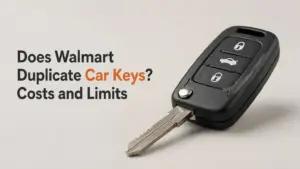
A metal key may only need cutting; a transponder, remote, or smart key usually also needs electronic programming.
Typical replacement costs range from $50-$100 for a mechanical key to $300-$600 or more for a smart key.
A mobile automotive locksmith can often make and program a key at the vehicle, while a dealership may require towing.
A lost key can remain authorized unless the technician erases it from the vehicle’s key memory.
A replacement key cannot normally be made legitimately without proving ownership or authorized possession.
Can You Get a New Car Key Without the Original?
A new car key can be made without the original because the replacement is created from vehicle records, lock decoding, or electronic diagnostic data rather than copied from an existing key. The provider may cut the blade from a manufacturer key code, decode a lock, or supply a factory-specific electronic key.
The missing original affects the method, price, and security procedure. A basic metal key is relatively simple, while an immobilizer key requires a chip that the vehicle recognizes. A push-button vehicle may need a proximity fob, secure software access, and a programmed emergency blade.
The most important distinction is between access and starting. A key can unlock a door but still fail to start the engine if its transponder is not registered. Similarly, a remote can lock and unlock doors without containing the correct immobilizer credential.
Vehicle manufacturers restrict key programming because the process can defeat an immobilizer. A reputable provider will ask for proof that you own or lawfully possess the vehicle before cutting or programming anything.
What Do You Need to Replace a Car Key?
You usually need the vehicle, a government-issued photo ID, proof of ownership or authorized possession, and the 17-character VIN. A locksmith or dealer may also request the registration, title, insurance card, lease agreement, rental agreement, or a second form of identification.
Prepare the following before requesting a quote:
- VIN: Find it on the driver-side dashboard, driver-door jamb label, registration, insurance documents, or title.
- Vehicle identity: Record the model year, make, model, engine, trim, and whether the vehicle has push-button start.
- Authorization: Bring the title or current registration. A leased vehicle may require the leasing company’s authorization.
- Photo ID: The name should normally match the ownership documents.
- Vehicle location: Tell the provider whether the car is at home, in a parking garage, or immobilized roadside.
- Remaining keys: Report every key still in your possession, including damaged fobs and valet keys.
A license plate number alone is usually insufficient. A provider may use it to locate the VIN through authorized databases, but the VIN and ownership documents establish the vehicle identity.
Rental cars, company vehicles, financed cars, and leased vehicles create additional authorization issues. The person requesting the key may need written permission from the rental company, fleet manager, lender, or leasing company.
Which Key Type Does Your Car Use?
The key type determines whether the provider must cut metal, program an immobilizer, pair a radio remote, or complete all three tasks. Vehicle age is a useful clue, but model-specific equipment and trim level matter more than a simple year cutoff.
| Key type | Common vehicle use | Required work without original | Typical replacement cost |
|---|---|---|---|
| Mechanical metal key | Older vehicles and some door-only locks | Decode or retrieve cuts, then duplicate | $50-$100 |
| Transponder key | Many vehicles from the mid-1990s onward | Cut blade and register chip | $120-$250 |
| Laser-cut key | Many newer vehicles and higher-security systems | Precision cutting and chip programming | $150-$300 |
| Remote-head key | Vehicles with ignition key and button controls | Cut blade, program immobilizer and remote | $200-$400 |
| Smart proximity fob | Push-button-start vehicles | Pair fob, program immobilizer, cut emergency blade | $300-$600 or more |
Mechanical keys
A mechanical key has no transponder and cannot electronically authorize the engine. A locksmith may obtain a factory key code using the VIN, decode the door lock, or cut a replacement based on the lock cylinder.
Mechanical keys are not limited to very old cars. Some newer vehicles use an electronic fob for starting but retain a separate metal emergency key for door access. That emergency blade may unlock the door without starting the car.
Transponder keys
A transponder key contains a passive chip that communicates with the immobilizer system. The metal blade can turn the ignition, but the engine control system will permit starting only after it recognizes the chip.
A correctly cut but unprogrammed transponder key commonly produces a no-start condition. The security indicator may flash, remain illuminated, or display a key-shaped warning.
Remote-head and laser-cut keys
A remote-head key combines a mechanical blade, an immobilizer chip, and radio buttons. Laser-cut or sidewinder blades use a milled groove and require compatible cutting equipment, but the blade shape alone does not determine whether programming is needed.
The remote and immobilizer are separate functions. A replacement may start the vehicle while its lock, unlock, or trunk buttons remain unpaired, or the buttons may work while the immobilizer remains unauthorized.
Smart keys
A smart key or proximity fob communicates with the vehicle through short-range antennas and usually supports push-button starting. Many fobs contain a concealed emergency blade, but that blade generally provides door access rather than engine authorization.
Smart-key replacement is more expensive because the fob, vehicle security module, software access, and emergency blade must all match. Some manufacturers also impose secure online authorization or PIN requirements.
Can a Locksmith Cut a Key From the VIN?
A locksmith may cut a key from the VIN when the manufacturer’s authorized key code is available and the vehicle’s locks still match the factory configuration. The VIN identifies the vehicle, but it does not directly reveal the physical cuts to every locksmith, and access to key-code databases varies.
The VIN method is not a guarantee. A prior owner may have replaced the ignition cylinder, door locks, or entire lock set. In that case, a factory code can produce a key that fits the original specification but does not turn the current ignition.
A locksmith may instead decode the vehicle by:
- Reading the door or trunk lock cylinder.
- Using a specialized decoding tool.
- Impressioning a compatible mechanical lock.
- Retrieving security data through an authorized diagnostic system.
- Confirming the key profile and cuts against manufacturer records.
A legitimate provider should not ask you to send an unredacted title or identity document through an unsecured channel unless a clear verification process exists. Share only the information needed for the appointment, and verify the business address, license requirements, invoice, and total price.
What Is the Replacement Process?
A typical all-keys-lost replacement takes 20-90 minutes after the technician reaches the vehicle, although ordering an OEM fob or obtaining brand-specific security authorization can extend the job to several days. The provider’s access to programming equipment is the main success factor.
Step 1: Confirm the vehicle and authorization
Give the locksmith or dealer the VIN, year, make, model, trim, location, and key type. Confirm that the quoted service includes both cutting and programming rather than only unlocking the vehicle.
You will know this step is complete when the provider can state the correct key part number or compatible aftermarket reference. A common mistake is quoting only the model name, because one model year may use multiple fob frequencies or immobilizer systems.
Step 2: Verify the lock and key profile
The technician checks whether the door, trunk, and ignition cylinders match the vehicle’s factory configuration. The technician may decode a lock if the VIN-derived key code does not fit.
You will know the key profile is correct when the blade enters and operates the intended cylinder smoothly before electronic programming. Do not force a blade into the ignition, because a wrong profile can damage the cylinder.
Step 3: Cut the mechanical blade
The provider cuts a standard, laser, sidewinder, or emergency blade using the appropriate code and machine. A smart fob may require only a small emergency blade, while a traditional ignition key requires a full operating blade.
You will know the cut is correct when the key turns the lock without excessive resistance. A blade that unlocks the door but does not operate the ignition may indicate different cylinders or an incorrect code.
Step 4: Program the immobilizer
The technician connects a compatible diagnostic tool, often through the OBD-II port, or uses a manufacturer-specific programming method. The tool registers the transponder or proximity fob with the immobilizer and may require secure credentials.
You will know programming succeeded when the engine starts normally and the security warning behaves as described in the owner’s manual. A mechanical key that turns but cannot start the engine has not completed this step successfully.
Step 5: Pair the remote functions
The lock, unlock, panic, trunk, hatch, and remote-start buttons may require a separate pairing procedure. Some vehicles pair the remote during immobilizer programming; others use a body control module or a manufacturer-specific sequence.
Test every button from several distances. A fob can be correctly programmed for starting but have a weak battery, wrong frequency, damaged buttons, or unpaired remote functions.
Step 6: Test and document the result
Test the ignition, door cylinders, remote buttons, trunk, emergency blade, warning lights, and any remote-start feature. Ask for the key type, part number, warranty, and programming result on the invoice.
Request that the provider erase the missing keys from the vehicle’s authorized-key list when the vehicle supports that function. Confirm how many keys remain registered after programming, because some all-keys-lost procedures delete every previously stored key.
How Much Does a Replacement Car Key Cost?
A typical replacement car key costs $50-$600 or more, with the final price determined by key technology, brand, OEM or aftermarket selection, programming access, travel, towing, and whether all keys are missing. Luxury European vehicles can exceed $800 when proprietary parts and software are required.
| Replacement scenario | Typical parts cost | Typical labor or service cost | Typical total time |
|---|---|---|---|
| Mechanical key, code cut | $20-$50 | $30-$75 | 10-20 minutes |
| Transponder key, aftermarket | $40-$120 | $80-$150 | 20-45 minutes |
| Remote-head key | $80-$220 | $100-$200 | 30-60 minutes |
| Smart fob, aftermarket | $120-$350 | $150-$300 | 45-90 minutes |
| Smart fob, OEM | $200-$500 | $150-$350 | 45-120 minutes |
| Dealer-ordered luxury fob | $300-$700 | $200-$500 | 1-7 days |
These figures are typical U.S. consumer ranges, not fixed prices. A mobile locksmith may add $50-$150 for travel or after-hours service, while a dealer visit can add towing, diagnosis, and a programming charge.
Ask whether the quote includes the key blade, transponder, remote buttons, programming, emergency service, VAT or sales tax, and warranty. The cheapest online listing often covers only an empty shell or an unprogrammed transmitter.
An aftermarket fob can reduce the parts price substantially, but compatibility must be verified by part number, FCC or regional frequency, chip type, vehicle year, and immobilizer system. A used fob may remain locked to another vehicle and may not be reusable.
Should You Use a Locksmith or Dealership?
A mobile automotive locksmith is usually the fastest and least expensive option for mainstream vehicles, while a dealership is the safer choice when the manufacturer restricts programming, the vehicle is under warranty, or an OEM fob is required. The correct choice depends on brand, urgency, and security-system complexity.
| Decision factor | Mobile automotive locksmith | Dealership |
|---|---|---|
| Typical mainstream cost | $120-$450 | $200-$700 |
| Stranded-vehicle access | On-site service, often 20-60 minutes after arrival | Usually requires tow to service center |
| Aftermarket parts | Common, often lower cost | Usually OEM |
| Programming coverage | Broad, but equipment varies | Brand-specific factory equipment |
| Luxury European coverage | Model-dependent, sometimes limited | Usually strongest |
| Same-day availability | Often available, including evenings | Depends on parts inventory and hours |
| Lost-key erasure | Available on supported systems | Available through factory procedure |
| Warranty and fit assurance | Provider-specific, commonly 90 days to 1 year | Manufacturer or dealer warranty terms |
Choose a locksmith when the vehicle is stranded, the make is commonly supported, and you need a complete cut-and-program service at the car. Choose a dealership when the vehicle uses restricted security credentials, the key must be OEM, or the locksmith cannot confirm programming coverage for the exact VIN.
Do not select a provider solely because the initial call price is low. A quote that excludes programming can become more expensive than a complete dealer quote after travel, diagnostic, and parts fees.
Can You Buy and Program a Key Yourself?
You can sometimes buy a compatible blank or fob yourself, but self-programming is limited to vehicles that support an owner procedure and already have the required working key. Many all-keys-lost situations require professional diagnostic access, security credentials, or a PIN.
Owner-programmable remote pairing is not the same as immobilizer programming. A manual sequence may pair lock buttons while leaving the engine-start transponder unrecognized. The owner’s manual is the authoritative source for permitted procedures.
Before buying online, match:
- Manufacturer part number.
- FCC ID or regional radio designation.
- Transponder type.
- Blade profile.
- Frequency and market region.
- Model year and trim compatibility.
- New, refurbished, or previously locked status.
Retail parts stores may cut some mechanical keys and sell batteries, but their ability to program immobilizer systems differs by location and vehicle. Do not assume that a key-cutting kiosk can create an authorized starting key.
What If the Key Was Stolen?
A stolen car key requires more than a physical replacement because the old key may still unlock or start the vehicle. Ask the dealer or locksmith to erase the stolen key’s identifier from the vehicle memory, reprogram all remaining keys, and assess whether the door locks should be rekeyed.
Remote unlocking and immobilizer authorization may use separate records. Removing a lost fob from the electronic key list can prevent starting, but it may not stop the metal blade from opening the door.
Take these additional steps:
- Move the vehicle to a secure location if possible.
- Report the theft to your insurer and, where appropriate, police.
- Replace or reprogram the stolen key immediately.
- Check whether the vehicle supports a reduced authorized-key list.
- Change garage, gate, or connected-app credentials if the key was stolen with personal information.
A stolen key alongside registration papers creates a higher risk than an unknown lost key. Tell the provider exactly what was taken.
What If the Car Battery Is Dead?
A dead vehicle battery can prevent electronic key programming because diagnostic equipment needs stable vehicle voltage. The technician should restore power with a jump-start, booster, or regulated battery support unit before attempting immobilizer programming.
A weak fob battery is a separate problem. Replacing the small coin cell, often a CR2032 or CR2025, may restore remote buttons or proximity detection without requiring a new fob. The correct battery number appears in the fob marking or owner’s manual.
Do not repeatedly attempt programming while vehicle voltage is unstable. Interrupted procedures can leave a module in an incomplete state and create additional diagnostic work. A technician should measure battery voltage and confirm charging-system condition before finishing the appointment.
Why Does the New Key Not Start the Car?
A new key that turns the ignition but does not start the engine usually has a programming, transponder, compatibility, or immobilizer problem rather than a cutting problem. The technician should verify the chip type, registration status, vehicle voltage, security light, and stored diagnostic codes.
| Symptom | Likely cause | Correct next check |
|---|---|---|
| Blade will not enter smoothly | Wrong profile or damaged cut | Compare blade profile and decode lock |
| Key turns, engine does not start | Unprogrammed or incompatible chip | Recheck immobilizer registration |
| Remote buttons fail, engine starts | Remote not paired or weak battery | Replace battery and pair remote |
| Proximity warning appears | Fob battery, antenna, or wrong fob | Use emergency start position and scan system |
| Security light flashes rapidly | Immobilizer rejection | Check key data and manufacturer procedure |
| All functions fail after programming | Low vehicle voltage or interrupted session | Stabilize battery and repeat authorized procedure |
If the ignition cylinder was replaced, the VIN-derived mechanical code may be wrong even when the electronic programming is correct. If an aftermarket alarm or remote-start system was installed, that system may interfere with factory immobilizer behavior.
What Should You Do After Replacement?
After replacement, test every function and obtain a second working key before another loss occurs. A duplicate made while one valid key exists is usually faster and less expensive than an all-keys-lost replacement.
Use this post-service checklist:
- Start the engine at least three times.
- Lock and unlock every exterior door.
- Test the trunk or hatch release.
- Test panic and remote-start functions if equipped.
- Confirm the emergency blade opens the driver door.
- Ask how many keys remain authorized.
- Request deletion of lost or stolen keys.
- Record the key part number and provider warranty.
- Store the spare away from the primary key.
A spare is not useful if it has never been tested. Keep it somewhere accessible but separate from the primary key, and replace its battery according to the manufacturer’s maintenance guidance.
Frequently Asked Questions
Can a dealer make a key from the VIN?
A dealer can usually order a vehicle-specific key using the VIN and ownership verification, but the VIN does not prove that the current ignition and door cylinders remain factory-original. The dealer may still need the vehicle present for cutting, programming, or security-system synchronization.
Can insurance pay for a lost car key?
Some comprehensive auto policies, roadside plans, manufacturer warranties, leasing contracts, and key-replacement add-ons cover lost or stolen keys. Coverage commonly depends on the policy, deductible, vehicle type, and whether the loss resulted from theft, so confirm benefits before authorizing service.
Can a locksmith make a smart key with no spare?
A qualified locksmith can make a smart key without a spare for many vehicles, but support varies by brand, model year, region, and security module. The locksmith needs the exact VIN and must confirm all-keys-lost programming before traveling to the vehicle.
What happens if all car keys are lost?
When all keys are lost, the provider identifies the vehicle, cuts a blade or supplies a fob, programs a new immobilizer credential, and may delete every old key from memory. The procedure generally costs more because it requires diagnostic access rather than simple duplication.
Can a lost key be disabled?
A lost transponder or smart key can often be removed from the vehicle’s authorized-key memory, but electronic deletion may not prevent a metal blade from opening a door. Stolen-key cases may therefore require both electronic reprogramming and mechanical rekeying.
Is a key fob battery replacement the same as a new key?
Replacing a fob battery restores power to the transmitter but does not create a new immobilizer credential. Try the correct coin-cell battery first when buttons or proximity detection fail, but obtain programming service if the vehicle still rejects the fob.
The Bottom Line
You can get a new car key without the original by using an automotive locksmith or dealership that can verify ownership, identify the vehicle from its VIN, cut the correct blade, and program the required immobilizer or proximity device. Typical costs range from $50 for a mechanical key to $600 or more for a smart fob. If the key was stolen, request deletion from the vehicle’s memory, and if all keys are missing, confirm that the quoted service includes all-keys-lost programming. A second tested key is the most effective way to avoid the higher cost and longer delay of the next replacement.