3rd gen Tacoma key fob programming links a replacement transmitter and, when applicable, its immobilizer chip to a 2016-2023 Toyota Tacoma. Keyed-ignition trucks and push-button Smart Key trucks use different procedures, and most immobilizer registrations require Toyota-capable diagnostic equipment or a vehicle-specific programmer.
Key Facts
The third-generation Toyota Tacoma covers model years 2016-2023 in the North American market.
Remote lock-button pairing and engine immobilizer registration are separate functions.
A fob that locks the doors may still be unable to authorize engine startup.
Push-button Tacoma Smart Keys normally require a Toyota-capable scan tool or approved programmer.
A working registered key is usually required for consumer add-a-key kits.
Typical professional programming costs range from $100-$300, excluding unusual key-cutting or towing charges.
What Does Tacoma Key Fob Programming Actually Do?
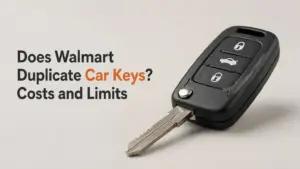
Tacoma key fob programming registers a wireless transmitter with the truck’s body electronics and, when the fob contains a transponder, registers the chip with the immobilizer system. The transmitter controls functions such as lock, unlock, panic, and sometimes the power tailgate, while the immobilizer decides whether the engine may start.
The physical key may contain two independent electronic identities. The remote keyless entry system listens for a radio transmission from the fob. The immobilizer system checks a coded transponder near the ignition cylinder or push-button start area. Registration of one does not guarantee registration of the other.
Toyota’s owner documentation treats key registration as a security function rather than a normal accessory setup. That distinction explains why a generic Bluetooth OBD reader cannot add a key: reading diagnostic trouble codes is different from accessing the immobilizer or Smart Key registration routine.
Remote pairing versus immobilizer registration
Remote pairing teaches the Tacoma to recognize button commands. Immobilizer registration teaches the engine-control and security systems to accept the transponder identity. A successful remote test therefore proves only that the RKE portion works.
This distinction matters during diagnosis. If the new fob locks and unlocks the doors but the truck displays a key warning or refuses to start, the remote portion likely succeeded while immobilizer registration did not. The remedy is a Toyota-capable key-registration procedure, not another battery replacement.
Which Fob Does a 2016-2023 Tacoma Use?
A 2016-2023 Tacoma uses either a keyed ignition remote-head key or a proximity Smart Key, depending on its original equipment and market configuration. The ignition system, button layout, FCC ID, internal board, transponder type, and Toyota part number must match before programming begins.
| Tacoma configuration | Physical identification | Programming concern | Typical replacement form |
|---|---|---|---|
| Keyed ignition | Metal blade enters an ignition cylinder | Blade must be cut and transponder must match | Integrated remote-head key |
| Push-button start | No mechanical ignition cylinder | Smart Key registration required | Proximity fob with emergency blade |
| Smart Key with dead battery | Start button remains present | Fob may need emergency start procedure | Correct Toyota Smart Key |
| Fleet or utility configuration | Trim equipment may differ from badge | Catalog fitment can be misleading | VIN-matched remote or key |
Trim badges are not sufficient identification. A Tacoma SR5 may have different key equipment from another SR5 built for a different package or market. The vehicle identification number and the original fob provide better evidence than a seller’s “fits Tacoma” statement.
How do you identify the correct replacement?
Match the original fob’s FCC ID, button arrangement, frequency, internal board number, Toyota part number, and blade or emergency-key design. The FCC ID is printed on the fob housing or electronic board, but an apparently identical shell can contain a different transmitter.
Common Toyota Tacoma listings may mention identifiers such as GQ4-52T, GQ4-54T, HYQ14FBA, or HYQ14FBB. Those identifiers are examples, not a universal fitment chart. Confirm the exact number against Toyota parts information or a reputable locksmith database for the VIN.
| Compatibility item | Where to check | Why it matters | Failure if mismatched |
|---|---|---|---|
| FCC ID | Fob label or circuit board | Identifies transmitter certification family | Buttons may never communicate |
| Toyota part number | Original packaging or VIN catalog | Confirms vehicle application | Wrong vehicle protocol |
| Frequency | Original board and market specification | Radio receiver must listen to same band | No lock response |
| Button layout | Original fob and replacement photos | Confirms function mapping | Missing or incorrect commands |
| Transponder type | Locksmith or Toyota catalog | Controls engine authorization | Starts fail despite working buttons |
| Blade profile | Existing key and key machine data | Allows mechanical door and ignition operation | Key cannot turn or unlock |
Do not buy a used Smart Key solely because its case looks correct. Many Toyota Smart Keys become vehicle-associated during registration, and resale listings frequently omit whether the unit is locked, already registered, damaged, or compatible with the target generation.
Can You Use the Chicken Dance on a 3rd Gen Tacoma?
The traditional Toyota “chicken dance” should not be treated as a guaranteed 2016-2023 Tacoma programming method. Some keyed remote configurations and aftermarket instructions describe manual remote-registration sequences, but those sequences do not replace immobilizer or Smart Key registration and may not apply to every Tacoma market or equipment package.
Older Toyota procedures often use door-open, ignition-cycle, and lock-cycle combinations to enter remote-learning mode. Toyota changed security architecture across model lines, so a sequence that works on a 2005 Tacoma or another Toyota model may fail on a 2016 Tacoma.
The safest rule is simple: use the exact procedure for the truck’s year, equipment, and key system. If the instructions do not explicitly identify the Tacoma configuration, do not assume that repeated ignition cycles will register the new key.
What equipment does programming require?
A Toyota-capable diagnostic tool, an approved vehicle-specific programmer, or professional locksmith equipment is normally required for immobilizer registration. A basic OBD2 code reader cannot perform the function.
| Equipment | Typical cost | Can add a working spare? | Can handle all keys lost? | Typical user |
|---|---|---|---|---|
| Generic OBD2 reader | $20-$80 | No | No | Code scanning only |
| Consumer Toyota programmer | $70-$150 | Usually, kit-dependent | Usually no | Owner with one working key |
| Professional scan tool | $500-$3,000+ | Yes, model-dependent | Sometimes | Locksmith or repair shop |
| Toyota dealer diagnostic system | Service-priced | Yes | Yes, with proof and vehicle access | Dealer technician |
| Automotive locksmith equipment | Included in service | Yes | Often yes | Mobile locksmith |
The tool menu may use terms such as Immobilizer, Transponder Key, Smart Key, Entry and Start, Main Body, or Key Code Registration. Menu names vary by tool software version. Selecting only Remote Control can produce a fob that locks doors but cannot start the engine.
How Does Smart Key Registration Work?
Smart Key registration uses the Tacoma’s security system to enroll the new proximity fob, usually through a Toyota-capable diagnostic interface. The exact prompts vary by tool, but the process commonly takes 10-30 minutes when one registered key is available and the replacement fob is correct.
Before you start
| Requirement | Recommended condition | Reason |
|---|---|---|
| Vehicle battery | At least 12.4 volts at rest | Prevents voltage interruption during registration |
| New fob battery | Fresh CR2032 or specified equivalent | Ensures reliable button and proximity transmission |
| Existing key | Registered and functional | Required by many add-a-key kits |
| Doors | Closed unless the tool instructs otherwise | Prevents session cancellation |
| Security proof | Title, registration, or photo ID | Dealer and locksmith verification |
| OBD connection | Firmly seated under driver-side dashboard | Prevents communication loss |
Do not leave the battery charger connected unless the tool manufacturer permits it. Poor-quality chargers can introduce voltage noise. A regulated automotive power supply is preferable during extended diagnostic work, especially when the vehicle’s battery is older or below 12.2 volts.
General professional workflow
- Identify the vehicle and key system. Select the correct year, Tacoma body, market, and Smart Key or transponder function. Confirm the replacement fob before starting.
- Connect the Toyota-capable tool. The diagnostic connector is under the driver-side dashboard. Turn the ignition to the state specified by the tool.
- Open the registration function. Use the tool’s immobilizer or Smart Key menu rather than a remote-only menu.
- Present the registered key. Some systems require the original fob to touch the engine-start button; others use a specified proximity position.
- Present the new fob. Follow the tool’s timing and placement prompts. Do not press random buttons during the enrollment window.
- Register every intended key. Some Toyota procedures erase or limit the active key list when a registration session starts, so follow the tool’s instruction about whether all keys must be presented.
- Verify both systems. Test lock, unlock, panic, proximity unlock if equipped, mechanical blade operation, and engine startup.
A successful session produces a tool confirmation, a security-indicator change, or an audible vehicle response, depending on the Tacoma and equipment. The final proof is functional testing outside the programming menu.
Common mistake during Smart Key registration
The most damaging mistake is ending the session after the remote buttons work. A professional verifies engine authorization separately because RKE enrollment and immobilizer enrollment can complete at different stages.
How Do You Program a Keyed-Ignition Tacoma?
A keyed-ignition Tacoma requires mechanical key cutting, remote-transmitter pairing where supported, and transponder registration for engine operation. The exact manual remote procedure varies by equipment, while the transponder portion generally requires Toyota-capable equipment when adding a new coded key.
A locksmith first decodes or cuts the blade to the vehicle’s key pattern. The blade must operate the door and ignition cylinder before electronic programming is attempted. A key that has the correct FCC ID but the wrong blade profile is still unusable.
Some keyed remote-head configurations may support an onboard remote-learning routine. That routine is not universal, and it may pair only the lock-button transmitter. Confirm the procedure through Toyota service information or the replacement-kit manufacturer’s instructions for the exact model year.
The transponder must be registered separately if the truck will not start with the new key. A copied metal blade can turn the ignition mechanically while the immobilizer rejects its electronic chip.
What Does Tacoma Key Programming Cost?
Typical 2026 customer pricing is approximately $100-$300 for a complete spare-key service, with lower prices for remote-only pairing and higher prices for all-keys-lost recovery. Final cost depends on the fob type, OEM or aftermarket part, key cutting, travel, security reset requirements, and local labor rates.
| Service route | Typical total price | Typical time | Working-key requirement | Main limitation |
|---|---|---|---|---|
| Mobile automotive locksmith | $100-$250 | 20-60 minutes | Often no for all-keys-lost service | Quality varies by provider |
| Toyota dealer | $180-$400+ | 1-3 hours | No, with ownership proof | Vehicle may need towing |
| Consumer programmer | $70-$150 plus fob | 15-45 minutes | Usually yes | VIN-specific and kit-limited |
| Independent repair shop | $120-$300 | 30-90 minutes | Depends on equipment | Not every shop supports immobilizers |
A quoted price should identify whether it includes the fob, blade cutting, programming, travel, taxes, and removal of a lost key from the vehicle’s authorized list. A low quote for “remote programming” may exclude immobilizer registration.
Which option is best for a spare key?
A mobile automotive locksmith is usually the most practical choice for one replacement key because the technician can verify the fob, cut the blade, program both systems, and test the result at the truck. A consumer kit can cost less when the owner already has a working master key and accepts the kit’s compatibility restrictions.
A Toyota dealer is strongest when the truck has unusual equipment, an uncertain key history, warranty documentation concerns, or no remaining keys. Dealer pricing is higher, but the parts catalog and security process are integrated.
What Happens When All Keys Are Lost?
All-keys-lost Tacoma service requires a security-capable locksmith or Toyota dealer because ordinary add-a-key kits generally need an already registered key. The technician must verify ownership, gain vehicle access, identify the immobilizer system, and create a new authorized key or reset the relevant security data.
Do not expect a basic scan tool to recover the truck. All-keys-lost work can require seed-code access, immobilizer reset procedures, replacement security data, or specialized Toyota equipment. Some procedures also require the vehicle battery to remain stable for an extended session.
| Situation | Best first call | Why | Likely extra requirement |
|---|---|---|---|
| One working key, adding a spare | Mobile locksmith or approved kit | Add-a-key path is available | Correct new fob |
| Fob lost, mechanical key remains | Locksmith | Cuts and programs replacement | Ownership proof |
| All keys lost at home | Mobile locksmith | Avoids towing | Security verification |
| All keys lost in a parking lot | Mobile locksmith with Toyota coverage | Mobile access reduces recovery time | Vehicle entry and battery support |
| No-start after remote pairing | Toyota locksmith or dealer | Immobilizer enrollment is incomplete | Diagnostic registration |
| Used Smart Key purchased online | Locksmith inspection | Unit may be locked or incompatible | Virginized or replacement fob |
A dealer may require the Tacoma to be physically present and may refuse service without ownership documentation. A mobile locksmith can often complete the job on-site, but confirm that the provider handles Toyota Smart Key systems rather than only mechanical keys.
Why Do the Locks Work but the Tacoma Will Not Start?
A Tacoma that responds to lock and unlock commands but will not start has usually completed remote-transmitter pairing without completing immobilizer or Smart Key registration. The condition can also result from a dead fob battery, incorrect fob type, damaged transponder, or a vehicle-side security fault.
Check the failure in a controlled order:
- Try the original registered key. If the original key starts the truck, the vehicle immobilizer is probably functional.
- Hold the new Smart Key against the start button and press the button with the brake pedal depressed. Toyota uses this emergency recognition method on many Smart Key vehicles when the fob battery is weak.
- Replace the fob battery with the specified type and confirm polarity.
- Verify that the replacement fob’s FCC ID and part number match.
- Re-run the immobilizer or Smart Key registration function.
- Scan for security, communication, or body-control trouble codes.
Do not repeatedly cycle the ignition or disconnect the battery as a first response. Battery disconnection does not normally erase a properly registered key, and it can create additional initialization issues such as lost window or radio settings.
How Do You Troubleshoot a Failed Programming Session?
A failed Tacoma programming session usually results from a mismatched fob, insufficient vehicle voltage, a tool that lacks Toyota security access, or an interrupted registration sequence. The best recovery is to document the exact failure message, restore stable power, and correct the compatibility issue before trying again.
| Symptom | Probable cause | Corrective action | Escalation point |
|---|---|---|---|
| Tool cannot communicate | Low OBD power, poor connector, wrong vehicle selection | Check fuse power, cable seating, and vehicle menu | Technician if multiple modules are offline |
| New buttons do nothing | Wrong FCC ID, dead battery, remote not paired | Confirm board number and install fresh battery | Locksmith if correct part still fails |
| Locks work, engine does not | Immobilizer not registered | Run transponder or Smart Key enrollment | Toyota-capable locksmith |
| Registration times out | Doors opened, weak battery, missed prompt | Close doors, stabilize voltage, restart procedure | Tool support or dealer |
| Used fob rejected | Existing VIN lock or incompatible board | Replace with new or properly reset unit | Automotive locksmith |
| Original key also stops working | Security list or vehicle fault | Stop repeated attempts and scan modules | Dealer or qualified locksmith |
Check the Tacoma’s relevant fuses using the owner’s manual and a test method appropriate for the circuit. Do not replace a fuse with a higher-rated fuse. The diagnostic connector needs power, but a fuse label and amperage can differ by year and market.
Can a dead fob battery prevent starting?
A dead Smart Key battery can prevent normal proximity detection, but many Tacoma Smart Key systems provide an emergency start method by holding the Toyota-logo side of the fob against the engine-start button while pressing the brake. This method does not program the key; it only helps the vehicle read a valid, already registered transponder.
If the emergency method works with the original fob, replace its coin-cell battery. If the method fails with a new unregistered fob, battery replacement will not substitute for immobilizer registration.
Are All Third-Generation Tacoma Fobs Interchangeable?
Third-generation Tacoma fobs are not universally interchangeable, even when the housings look identical. Keyed and Smart Key systems use different security functions, and North American, Canadian, and other market vehicles can use different frequencies, software, or part numbers.
The model year alone is insufficient. Match the VIN, ignition type, FCC ID, board number, button count, frequency, blade configuration, and Toyota catalog part number. Aftermarket listings that group 2016-2023 together can simplify fitment but cannot guarantee every trim.
What is an aftermarket fob’s main risk?
The primary risk is buying a transmitter that physically fits but cannot communicate with the Tacoma or cannot be registered to its immobilizer. Aftermarket quality also varies in button durability, battery contacts, case sealing, and emergency-blade accuracy.
An aftermarket fob can be sensible when the part is verified and the supplier provides a return policy. OEM Toyota hardware is the safer choice when the truck has Smart Key, when no spare exists, or when a failed part would require another diagnostic appointment.
Which Programming Option Should You Choose?
Choose a consumer programmer when the Tacoma has one working registered key, the kit explicitly covers the exact vehicle, and the owner can accept a VIN-specific process. Choose a mobile locksmith when the fob must be supplied, cut, and programmed in one visit or when the vehicle has no working key.
| Owner situation | Recommended route | Typical spend | Reason |
|---|---|---|---|
| Budget-conscious owner with spare key | Vehicle-specific DIY kit | $70-$150 | Lowest labor cost |
| Owner unsure which fob fits | Mobile locksmith | $100-$250 | Technician verifies hardware |
| Push-button Tacoma with no spare | Locksmith or dealer | $180-$400+ | Security enrollment is required |
| Multiple replacement keys | Professional locksmith | $150-$350+ | One session may register several keys |
| Fleet or work truck | Dealer or established locksmith | $200-$450+ | Documentation and repeat support matter |
A professional diagnostic tool is rarely economical for one truck owner. Tool purchase prices often exceed several locksmith visits, and Toyota security functions may require subscriptions, tokens, cables, or software updates.
What should you bring or verify before booking?
Have the VIN, model year, trim, ignition type, original fob, title or registration, and the exact symptoms ready. Ask whether the quoted service includes an OEM or aftermarket fob, key cutting, both remote and immobilizer programming, travel, and removal of a lost key.
Avoid providers who promise that every Toyota key can be programmed with a universal sequence. A competent technician should ask whether the Tacoma uses a mechanical ignition cylinder or push-button start before quoting the job.
Expert Rules That Prevent Expensive Mistakes
Rule 1: Test the original key before blaming the new one. If the original key starts the Tacoma, the vehicle-side immobilizer is less likely to be the problem. This simple comparison prevents unnecessary battery, fuse, and ECU work.
Rule 2: Program all intended keys in one session when the tool requires it. Some security procedures manage a finite authorized-key list or expect every available key to be presented. Leaving an existing key out can create an avoidable second appointment.
Rule 3: Never judge success by door locks alone. A lock response confirms radio communication, not engine authorization. Start the Tacoma, test the emergency blade, and verify every button before leaving the technician or programming menu.
A replacement fob is not a complete solution until the mechanical, remote, proximity, and immobilizer functions all pass their respective tests. That four-part check is faster than diagnosing a no-start problem later.
FAQ
Can I program a 2016 Tacoma key without a locksmith?
A 2016 Tacoma may support a manual remote-learning procedure in some keyed configurations, but the method is not universal and may pair only the buttons. A new transponder or Smart Key generally needs Toyota-capable programming equipment. Verify the exact ignition system and instructions before purchasing a kit.
How many keys can a Tacoma store?
The permitted number depends on the Tacoma’s immobilizer or Smart Key system and the diagnostic tool’s software. Do not assume that every key slot is available or that adding one key cannot affect the stored list. A locksmith can check the active registrations during programming.
Can I reuse my old Tacoma fob after replacing the shell?
Usually, a shell replacement is possible if the original electronic board, transponder, buttons, and battery contacts remain undamaged. Transfer the board carefully and test every function. Replacing only the housing does not create a new key and does not require programming when the original electronics remain intact.
Does Toyota charge separately for the fob and programming?
Toyota dealers commonly price the replacement part, key cutting where applicable, and labor separately, although packages vary by location. Request an itemized quote that identifies the fob part number, programming labor, blade cutting, taxes, and any towing or security-service charges.
Can a Tacoma start with the key fob battery removed?
A properly registered Smart Key may start using the emergency recognition procedure described in the owner’s manual, even when the coin-cell battery is weak or depleted. The vehicle still needs a valid immobilizer identity. An unprogrammed replacement fob will not become authorized because its battery is replaced.
Should I buy an OEM or aftermarket Tacoma key fob?
Buy OEM when compatibility uncertainty, Smart Key equipment, or all-keys-lost risk makes failure expensive. A verified aftermarket fob can reduce cost for a keyed truck or a spare-key situation, but confirm the FCC ID, board, part number, return policy, and programming support before purchase.
The Bottom Line
3rd gen Tacoma key fob programming is not one universal button sequence. Identify whether the truck uses keyed ignition or Smart Key, match the replacement by VIN and electronic identifiers, and separate remote pairing from immobilizer registration. With one working key, a vehicle-specific programmer may cost about $70-$150; without any working key, a Toyota-capable locksmith or dealer is the dependable path.