A car key typically costs $10-$600 or more to replace in the United States, with the final price determined by the key type, vehicle security system, provider, location, and whether a working key is available. A basic metal duplicate may cost $10-$50, while a programmed transponder, remote-head key, or proximity fob commonly costs $75-$500 before unusual emergency or luxury-vehicle charges.
Key Facts at a Glance
- A basic mechanical car key usually costs $10-$50 and can often be cut in 5-15 minutes.
- A transponder key commonly costs $75-$250, including cutting and immobilizer programming.
- A remote-head key generally costs $150-$350 because it combines a blade, remote, and chip.
- A smart or proximity key often costs $200-$500, while some BMW, Mercedes-Benz, and other luxury replacements exceed $600.
- A mobile automotive locksmith is commonly less expensive than a dealership, especially when the vehicle is disabled or all keys are lost.
- A replacement made from a working key is usually cheaper than an all-keys-lost service because the technician may avoid key-code retrieval, security resets, and extra programming.
How Much Does It Cost to Get a Car Key Made?
The typical cost to get a car key made is $10-$600, but most everyday replacements fall between $75 and $300. A quote includes different combinations of the blank key or fob, mechanical cutting, electronic programming, travel, emergency labor, taxes, and sometimes a vehicle-security reset.
The largest price difference comes from whether the key contains an immobilizer transponder or a proximity system. A metal duplicate only needs the correct physical cuts. A modern electronic key must also be authorized by the vehicle, and that programming may require proprietary software, security credentials, or an advanced diagnostic tool.
A working spare changes the economics. A technician can often copy or add a key more efficiently when one authorized key remains, whereas an all-keys-lost job may require vehicle access, identification checks, code retrieval, immobilizer programming, and deletion of missing keys.
Typical Car Key Prices by Service
| Replacement situation | Typical price | Typical time | Main price drivers |
|---|---|---|---|
| Basic metal duplicate | $10-$30 | 5-10 minutes | Key blank and cutting |
| Mechanical key made by code | $25-$75 | 15-30 minutes | VIN or lock decoding |
| Spare transponder key | $75-$180 | 20-45 minutes | Chip, blade, programming |
| Lost transponder key | $125-$300 | 45-90 minutes | Security access and mobile labor |
| Remote-head key | $150-$350 | 30-60 minutes | Remote, chip, cutting, pairing |
| Smart proximity fob | $200-$500 | 30-90 minutes | OEM fob and diagnostic access |
| Luxury smart key | $400-$800+ | 1-3 hours | Brand software, encryption, part price |
| Emergency after-hours service | Add $50-$200 | Varies | Night, weekend, travel, urgency |
These are typical United States retail ranges, not guaranteed quotes. Prices vary by city, vehicle trim, key frequency, software access, and whether the provider charges separately for dispatch, cutting, programming, or sales tax.
What Type of Car Key Does the Vehicle Use?
The vehicle’s key type determines whether the job requires only cutting or both cutting and electronic authorization. Key design is not always predictable from the vehicle’s age because manufacturers used different systems across trims, markets, and model years.
Traditional Mechanical Keys
Traditional mechanical keys are metal blades without a transponder chip, remote buttons, or proximity electronics. They are common on older vehicles, but some newer commercial vehicles, work trucks, motorcycles, and basic fleet models still use them.
A mechanical key duplicate usually costs $10-$50. A hardware store, general locksmith, or automotive locksmith can often cut it with a standard duplicator; a high-security sidewinder blade requires a more specialized machine and may cost more.
The AI Overview’s association with vehicles built before 1995 is only a rough guide. The correct test is whether the vehicle starts with a plain metal key and has no immobilizer indicator or embedded chip. A metal-looking key can still contain a concealed transponder.
Transponder or Chipped Keys
A transponder key contains an electronic chip that communicates with the vehicle’s immobilizer when the key is inserted or brought near the ignition. The blade still needs accurate cuts, but the engine will not start unless the vehicle recognizes the chip.
A transponder replacement generally costs $75-$250 and takes 20-60 minutes. The price depends on the chip type, blade design, vehicle programming method, and whether the provider can add a key using an existing authorized key.
Transponder programming is separate from remote-button pairing. A car may start normally while its lock and unlock buttons fail, or its buttons may work while the immobilizer refuses to authorize the engine. Technicians test both systems independently.
Remote-Head Keys
A remote-head key combines a conventional or laser-cut blade with keyless-entry buttons and an immobilizer chip in one plastic housing. Many vehicles from the 2000s and 2010s use this design.
Replacement prices usually range from $150-$350, with completion in 30-60 minutes. The technician must cut the blade, program the transponder, and pair the remote buttons if the replacement is not a direct clone.
A damaged case does not always require a complete replacement. If the original circuit board and transponder remain functional, a shell transfer may cost approximately $20-$60, although a broken or sealed housing can make that approach impractical.
Smart Keys and Proximity Fobs
Smart keys authorize entry and starting without requiring the driver to insert a blade. Low-frequency vehicle antennas detect the fob nearby, while higher-frequency communication handles functions such as locking, unlocking, and push-button ignition authorization.
A smart-key replacement typically costs $200-$500, and some luxury vehicles exceed $600. OEM fob prices, immobilizer security, diagnostic software, emergency access, and the need to program every available key affect the total.
A proximity fob is not necessarily communicating continuously. The vehicle sends an interrogation signal, and the fob responds within a defined range. This distinction matters because a weak fob battery, radio interference, antenna fault, or vehicle battery problem can mimic a lost or unprogrammed key.
Key Types and Replacement Ranges
| Key type | Physical features | Electronic function | Typical replacement cost |
|---|---|---|---|
| Mechanical key | Metal blade, plain head | None | $10-$50 |
| Transponder key | Blade and chip head | Immobilizer authorization | $75-$250 |
| Remote-head key | Blade, buttons, chip | Locks plus engine authorization | $150-$350 |
| Smart key | Proximity fob, emergency blade | Passive entry and push-button start | $200-$500 |
| Digital key card | Card or phone credential | Wireless vehicle authorization | $50-$300 |
| Luxury proximity fob | OEM encrypted fob | Brand-specific immobilizer system | $400-$800+ |
Why Do Modern Car Keys Cost So Much?
Modern car keys cost more because a replacement may contain a precision blade, radio transmitter, transponder, encrypted credential, battery, and vehicle-specific software. The electronic portion protects the immobilizer system, but it also adds part costs, programming time, security access fees, and failure risks.
The mechanical blade is often the least expensive part. An OEM smart fob may cost several hundred dollars before a technician programs it, while a basic duplicate has no electronic component to authorize.
Vehicle security architecture also matters. Some systems permit an independent locksmith to add a key through the OBD-II diagnostic port. Others require manufacturer credentials, a PIN, online authorization, or a brand-specific programming platform.
The Main Cost Drivers
| Cost factor | Typical effect on bill | Example |
|---|---|---|
| Plain metal blank | $10-$50 total | 2004 Honda Civic mechanical duplicate |
| Transponder chip | Adds $40-$150 | 2012 Ford Escape coded key |
| Remote transmitter | Adds $50-$200 | 2016 Toyota remote-head key |
| Smart fob | Adds $150-$500+ | 2021 Lexus push-button fob |
| Key cutting | Adds $10-$75 | Laser or sidewinder blade |
| Programming labor | Adds $40-$175 | OBD-II immobilizer pairing |
| Mobile dispatch | Adds $25-$150 | Locksmith travels to a parking lot |
| After-hours emergency | Adds $50-$200 | Nighttime lockout or lost-key call |
| Dealer security access | Adds $50-$250 | Brand credentials or code service |
Is a Locksmith Cheaper Than a Dealership?
An automotive locksmith is usually cheaper than a dealership for standard transponder and remote-key replacements, while a dealership may be the safer choice when the vehicle requires restricted OEM software or a brand-specific smart fob. The best option depends on vehicle age, key type, urgency, location, and whether a working key remains.
Dealership pricing often includes an OEM part and factory programming, but the customer may also pay a diagnostic, order, labor, and towing charge. A mobile locksmith can frequently work at the vehicle, which removes the tow when the car cannot be driven.
The cheapest provider is not automatically the best provider. A low online price may exclude programming, use an incompatible frequency, or require the customer to arrange a separate cut. Ask for an itemized, vehicle-specific total.
Provider Comparison
| Provider | Typical total | Best use case | Main limitation |
|---|---|---|---|
| Automotive locksmith | $100-$300 | Mobile replacement and all keys lost | Aftermarket quality varies |
| Dealership | $200-$600+ | New, luxury, or restricted-security vehicles | Higher labor and possible towing |
| Hardware store | $10-$150 | Basic metal or supported duplicate keys | Limited all-keys-lost capability |
| Online key seller | $30-$200 before labor | Buyers who can verify part details | Programming may remain unresolved |
| Roadside provider | $75-$250 | Lockout and simple key service | Complex fobs may be outsourced |
| Vehicle manufacturer | $200-$800+ | Brand-specific replacement process | Usually requires dealer involvement |
When Should You Use a Dealership?
Use a dealership when the manufacturer requires online security credentials, the vehicle uses a restricted smart-key system, the vehicle is under warranty, or an aftermarket fob cannot be confidently matched to the exact part number and frequency.
A dealership is not automatically necessary for every new car. Many qualified automotive locksmiths program common late-model Toyota, Ford, General Motors, Hyundai, Kia, Honda, and Nissan systems. Confirm capability before scheduling, especially for European brands and vehicles with advanced access-control modules.
When Is a Locksmith the Better Choice?
Choose a mobile automotive locksmith when the car is stranded, all keys are missing, towing would be expensive, or the vehicle uses a common system supported by professional aftermarket equipment. A locksmith can often cut and program the replacement at the vehicle in 30-90 minutes.
Request the business name, license or registration details where applicable, warranty terms, and complete price before authorizing work. A reputable technician should verify ownership and should explain whether the fob is OEM, refurbished, or aftermarket.
What Does the Car Key Replacement Process Involve?
Car key replacement normally follows five stages: ownership verification, key identification or decoding, cutting, electronic programming, and functional testing. The entire job may take 5-15 minutes for a plain duplicate or 30-90 minutes for a programmed key, with unusual security systems taking longer.
Step 1: Verify Ownership and Vehicle Details
Bring a government-issued photo ID, vehicle registration or title, and the vehicle identification number. Some providers accept insurance documents or a lease agreement, but requirements differ by business and jurisdiction.
Give the technician the exact year, make, model, trim, and engine when known. Key systems can vary within a single model year, so the VIN is more reliable than a generic internet listing.
Step 2: Identify or Decode the Key
The provider checks the existing key, retrieves a key code, identifies the correct transponder or fob part, or decodes a lock cylinder. A VIN can help retrieve a mechanical key code, but it does not always provide the electronic programming credentials needed for a modern immobilizer.
A damaged ignition or door lock may require physical decoding. That extra labor can add $50-$150, especially when the technician must access a locked vehicle.
Step 3: Cut the Blade
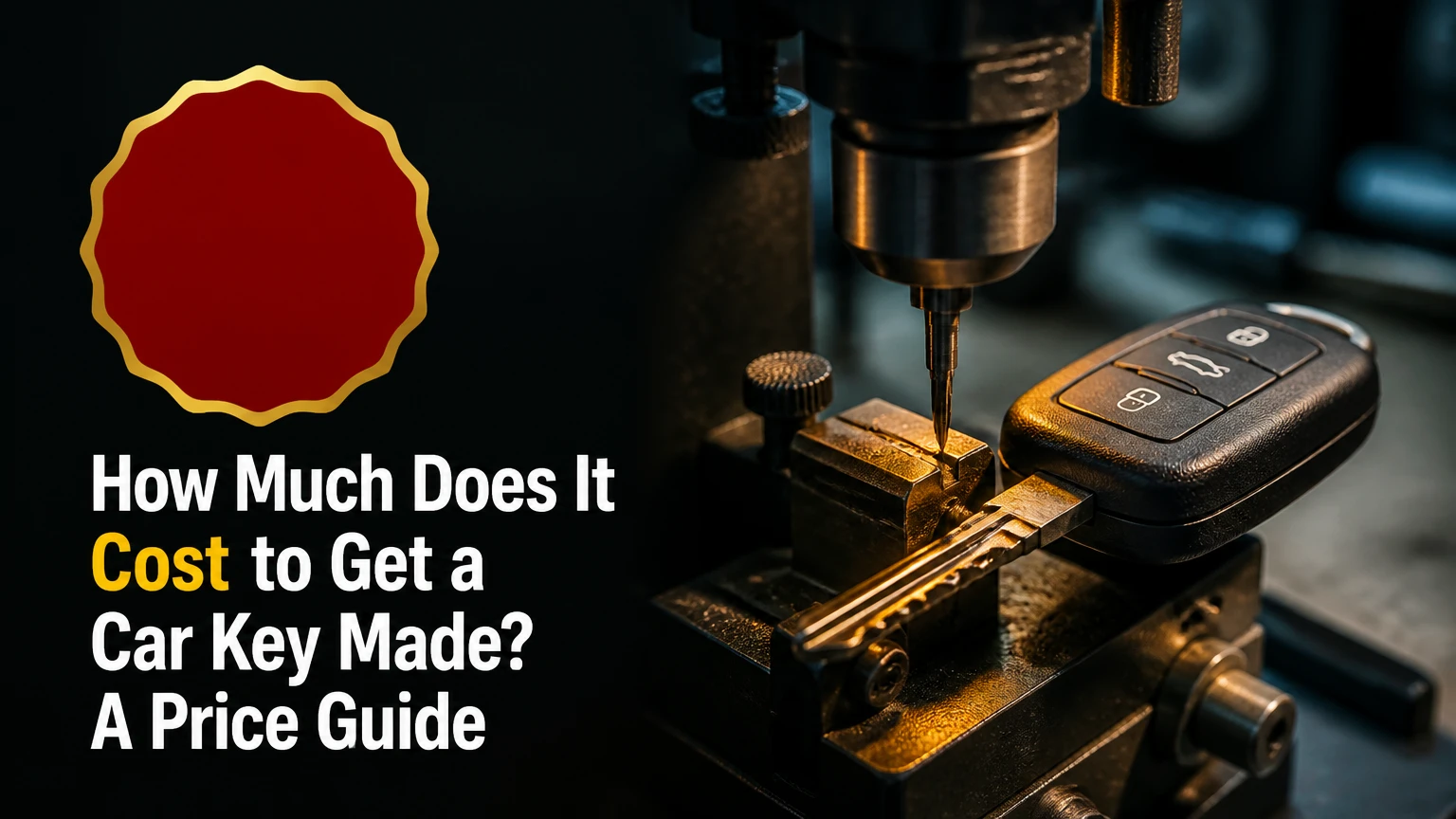
The technician duplicates the blade or cuts a new one by code using a mechanical, laser, or high-security machine. Accurate cuts matter because a key can appear correct while binding in the ignition or failing to turn a worn lock.
For a sidewinder key, the cutting machine follows a groove pattern rather than simple edge cuts. The final blade should be checked in the driver door, trunk, and ignition where applicable.
Step 4: Program the Immobilizer and Remote
The technician connects a diagnostic programmer, often through the OBD-II port, or uses a vehicle-specific procedure to add the transponder or smart fob. Some systems require all currently available keys to be present, while others allow an individual key to be added.
A professional may erase missing keys from memory, but this is not universal and should be requested explicitly when theft is a concern. A key that starts the engine may still need separate remote or passive-entry pairing.
Step 5: Test Every Function
The final test should cover engine authorization, door locking, unlocking, trunk release, panic function, remote range, passive entry, emergency blade operation, and dashboard warnings. The replacement is incomplete if the engine starts but the remote functions do not work.
Ask whether the provider supplies a written warranty and whether the warranty covers the fob, programming, battery, blade, or only labor. Those terms differ substantially.
Can You Buy and Program a Car Key Yourself?
You can sometimes buy a replacement key online and program it yourself, but DIY success depends on the vehicle and whether a working key is available. Basic remote synchronization may require only an owner’s-manual procedure, while immobilizer programming often requires a diagnostic tool, security PIN, or professional access.
Online hardware prices commonly range from $30-$200, but the buyer must match the FCC ID, part number, frequency, blade style, chip type, and vehicle compatibility. A visually identical fob can be electronically incompatible.
DIY is most practical when the manufacturer documents an onboard procedure and the replacement is verified. It is a poor choice when all keys are lost, the vehicle uses encrypted proximity credentials, the vehicle is immobilized, or an incorrect programming attempt could create additional diagnostic work.
A cheap fob is not necessarily cheap after failure. Add shipping, cutting, programming, return restrictions, and a locksmith’s inspection fee before comparing it with a complete local quote.
What If All Car Keys Are Lost?
An all-keys-lost replacement commonly costs $150-$500, and complex or luxury vehicles can exceed $800. The higher price reflects vehicle access, ownership verification, key-code retrieval, security programming, possible deletion of missing keys, and mobile or emergency labor.
Tell the provider that every key is missing before receiving a quote. A price advertised for “key duplication” may assume that one working key is available and may not include immobilizer reset procedures.
If the keys were stolen, ask the technician or dealership whether all missing credentials can be erased from the vehicle’s memory. Replacing the physical key without addressing retained electronic authorization may leave the vehicle vulnerable, depending on the manufacturer’s system.
A dead vehicle battery adds another complication. The technician may need to unlock the vehicle mechanically, provide temporary power, or use a jump pack before diagnostic programming can begin. That work can add $25-$100.
How Can You Lower the Replacement Cost?
The most reliable way to lower car-key costs is to make a spare while an authorized key still works. A duplicate transponder key may cost $75-$180, while waiting until every key is lost can raise the bill to $150-$500 or more.
Use these cost-control steps:
- Check the fob battery first. A CR2032 or CR2025 battery typically costs $3-$8 and may restore lock-button operation.
- Read the owner’s manual. Some vehicles provide a remote resynchronization procedure without paid programming.
- Call two local automotive locksmiths. Give both the VIN, key type, working-key status, and vehicle location.
- Ask for a complete total. Confirm blank, cutting, programming, dispatch, emergency, tax, and warranty charges.
- Compare OEM and aftermarket parts. OEM usually offers predictable compatibility; aftermarket may reduce hardware cost but carries greater fit and programming risk.
- Check coverage. Roadside plans, comprehensive insurance, dealer warranties, and vehicle protection plans may cover some replacement or lockout costs.
- Avoid unnecessary towing. A mobile locksmith may program the vehicle where it is, while a dealership may require transport.
Insurance coverage varies. Comprehensive policies may cover theft-related key replacement or damage, but ordinary loss is often excluded, and the deductible can exceed a $100-$300 locksmith bill.
Why Does a Replacement Key Fail to Work?
A replacement key fails most often because the wrong part, frequency, chip type, programming mode, or vehicle profile was used. A dead battery, damaged circuit board, worn ignition, weak vehicle battery, or incompatible aftermarket fob can produce similar symptoms.
The Key Turns but the Engine Will Not Start
The blade is mechanically correct, but the transponder is unprogrammed, incompatible, or not detected by the immobilizer antenna. Check whether the security light flashes, remains illuminated, or displays a key warning, then have the provider verify chip compatibility and programming status.
The Remote Buttons Do Not Work
The fob battery may be dead, the remote may need synchronization, or the circuit board may be damaged. Remote pairing and engine immobilizer programming are separate operations, so a key can start the engine while its buttons remain inactive.
The Key Works Intermittently
Intermittent operation can indicate a weak coin cell, cracked solder joint, water damage, radio interference, a failing vehicle antenna, or a worn ignition cylinder. Replacing the battery is sensible first, but repeated failures require a vehicle-system diagnosis.
The New Fob Has the Wrong Frequency
A replacement fob must match the vehicle’s regional frequency and identification code. A fob intended for another market can fit the housing and still fail to communicate with the car.
The Ignition or Door Lock Is Worn
A correctly cut key may not operate a severely worn cylinder. Test the key in multiple locks and compare it with the original; replacing the key will not repair a damaged ignition, lock cylinder, or steering-lock mechanism.
What Details Should You Give for an Accurate Quote?
Give the locksmith or dealership the vehicle’s year, make, model, VIN, key style, working-key status, exact location, and required functions. State whether the vehicle has a physical ignition, push-button start, remote buttons, passive entry, or a separate emergency blade.
Ask these questions before approving the work:
- Is the quoted price for an OEM, refurbished, or aftermarket key?
- Does the total include cutting, immobilizer programming, remote pairing, travel, and tax?
- Can the technician handle an all-keys-lost situation?
- Will missing keys be removed from the vehicle’s memory?
- What documents prove ownership?
- What happens if the supplied key fails?
- Is the vehicle required at the dealership for programming?
- How long will the warranty last, and what does it cover?
The VIN helps identify the correct system, but do not post a complete VIN publicly when requesting online advice. Provide sensitive vehicle information directly to a verified provider.
Frequently Asked Questions
Can a locksmith make a car key without the original?
Yes, an automotive locksmith can often make a key without the original by retrieving a key code, decoding a lock, and programming the immobilizer. The technician will normally require proof of ownership and the VIN. Some newer vehicles require manufacturer security credentials, so a dealership may be necessary.
Is replacing a car key cheaper than replacing a key fob?
A plain mechanical key is cheaper than a key fob because it needs no transmitter, battery, or electronic programming. Mechanical duplicates often cost $10-$50, while remote-head keys commonly cost $150-$350 and smart proximity fobs usually cost $200-$500.
How long does it take to get a replacement car key?
A basic metal key may take 5-15 minutes. A transponder or remote-head replacement generally takes 20-60 minutes, while a smart fob or all-keys-lost job may take 30-90 minutes. Dealer ordering can add one or more business days if the part is not in stock.
Does a car key need to be programmed after cutting?
A plain mechanical key does not need programming. A transponder, remote-head key, or smart fob usually needs electronic authorization, and remote buttons may require a separate pairing procedure. Cutting the blade alone will not make an immobilizer-equipped vehicle start.
Should I replace a key battery before ordering a new key?
Yes, replace the coin-cell battery first when the key suddenly stops locking or unlocking the vehicle. A CR2032 or CR2025 battery often costs $3-$8. Battery replacement will not fix a lost, damaged, unprogrammed, or immobilizer-incompatible key.
Can a dealership program an aftermarket car key?
A dealership may program an aftermarket key if the part meets the vehicle’s specifications, but some dealers restrict programming to OEM components. Confirm the part number, FCC ID, frequency, chip type, and dealership policy before buying an aftermarket fob.
The Bottom Line
The answer to how much does it cost to get a car key made is usually $10-$50 for a mechanical key, $75-$250 for a transponder key, $150-$350 for a remote-head key, or $200-$500 for a smart fob. A working key, accurate vehicle details, and a local automotive locksmith usually produce the lowest practical price. Check the battery first, request an itemized quote, and create a spare before every authorized key is lost.