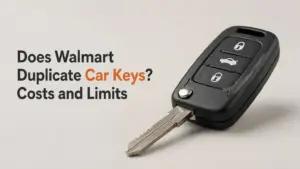
Recoding a car key typically costs BDT 1,000-5,000 for a standard transponder key and BDT 5,000-25,000 or more for a smart key. An all-keys-lost job commonly reaches BDT 15,000-40,000+, because the technician must supply, cut, authorize, and program a new key rather than simply sync an existing one.
Key Facts at a Glance
- A remote-button reset and an immobilizer recode are separate services.
- A working spare usually costs 50-70% less than replacing the only lost key.
- Typical professional programming takes 15-30 minutes for a standard key.
- Smart-key replacement commonly costs BDT 8,000-25,000+ in Dhaka.
- A key-fob battery powers the buttons, while the immobilizer transponder often operates without that battery.
- Dealers provide factory parts and software, while automotive locksmiths often reduce mobile replacement costs.
How Much to Recode a Car Key?
The cost to recode a car key depends on the key technology, whether a working key remains, the vehicle brand, and whether the job includes cutting or replacement. In Dhaka, a simple remote or transponder programming job may cost BDT 1,000-5,000, while a replacement smart key or all-keys-lost service can exceed BDT 25,000.
Programming is only one part of the invoice. A technician may charge separately for the blank key, remote shell, transponder chip, blade cutting, diagnostic access, mobile attendance, emergency timing, and deletion of missing keys from the vehicle’s memory.
Typical Costs by Key Type
| Key type | Typical Dhaka cost | Typical international cost | Typical time |
|---|---|---|---|
| Mechanical blade | BDT 150-300 | USD 5-10 | 5-10 minutes |
| Transponder key | BDT 1,500-3,500 | USD 50-100 | 10-20 minutes |
| Remote-head key | BDT 3,500-8,000 | USD 125-250 | 20-30 minutes |
| Smart or proximity key | BDT 8,000-25,000+ | USD 200-500+ | 30-60 minutes |
| All keys lost | BDT 15,000-40,000+ | USD 300-800+ | 1-3 hours |
These are typical working ranges, not fixed tariffs. A Toyota or Honda key may fall near the lower end because replacement shells, chips, and diagnostic support are widely available. A European vehicle can cost substantially more when the key must be ordered by VIN or protected software access is required.
What Charges Can Appear on the Quote?
| Charge | Typical amount in Dhaka | When it applies | Can it be avoided? |
|---|---|---|---|
| Remote programming | BDT 500-2,000 | Buttons stopped responding | Sometimes, on older vehicles |
| Transponder programming | BDT 1,000-5,000 | Engine does not recognize key | Rarely, on newer vehicles |
| Blade cutting | BDT 150-1,500 | New physical key required | No, if the blade is new |
| Blank key or fob | BDT 1,000-20,000+ | Replacement hardware | Only if you already own a compatible blank |
| Mobile call-out | BDT 500-3,000 | Technician travels to the car | Yes, if the car reaches the shop |
| Emergency or night fee | BDT 1,000-5,000+ | After-hours service | Yes, by booking during business hours |
| Security or PIN access | BDT 1,000-10,000+ | Brand-specific authorization | Usually no |
A low programming price can therefore produce a high final bill if the customer needs a new smart fob. Ask for the complete price, including hardware, cutting, programming, VAT or tax, travel, and warranty, before authorizing the work.
What Does “Recode” Mean?
“Recode” can describe several different operations, so the correct price depends on the exact symptom and desired result. A remote may need button synchronization even when the engine immobilizer is working, while a replacement key may need both a cut blade and an immobilizer enrollment.
Transponder Programming
Transponder programming pairs the chip in the key with the vehicle’s immobilizer system. The engine control unit or immobilizer module checks that chip before allowing fuel injection, ignition, or engine operation.
A key can physically turn the ignition and still fail to start the engine when its transponder is unrecognized. This is why cutting a duplicate blade does not automatically create a working ignition key.
Remote Programming
Remote programming pairs lock, unlock, trunk, panic, or alarm buttons with the vehicle’s body control module. The remote battery normally powers these radio transmissions.
Remote programming may be possible through an ignition-and-button sequence on some older Ford, Toyota, Honda, Chevrolet, and other models. The procedure is highly model-specific, however, and a successful door-lock response does not prove that the immobilizer chip has been programmed.
Cloning
Cloning copies the identity of a working transponder onto a compatible blank. The vehicle generally sees the cloned key as the same identity as the original key.
Cloning can reduce cost when a spare is needed and the original key works. It is less useful when all keys are lost, when the vehicle requires individually registered keys, or when the owner wants the missing key removed from the car’s memory.
Cutting and Replacement
Key cutting creates the physical blade that operates the door or ignition lock. Cutting is mechanical, while coding is electronic, so a new blade can fit the lock without starting the vehicle.
A full replacement may therefore include four separate outcomes: a compatible blank, a cut blade, remote synchronization, and immobilizer programming.
Which Key Type Do You Have?
The easiest way to estimate price is to identify whether the vehicle uses a metal blade, transponder, remote-head key, or proximity fob. The key’s appearance helps, but the vehicle’s model year and starting system provide stronger clues.
| Key technology | Physical signs | Main function | Common failure |
|---|---|---|---|
| Mechanical key | Metal blade with no electronic head | Opens lock and starts older ignition | Worn or incorrect blade |
| Transponder key | Plastic head, no buttons | Immobilizer authorization | Engine cranks but will not run |
| Remote-head key | Blade and lock buttons in one unit | Starting plus remote entry | Buttons fail or chip loses pairing |
| Smart key | Push-button start, proximity fob | Keyless entry and authorization | No-key warning or intermittent detection |
| Digital key | Phone or wearable credential | App-based entry and starting | Account, phone, or pairing failure |
A push-to-start vehicle generally uses a smart or proximity key, although some vehicles also contain an emergency mechanical blade. That blade can unlock the door but cannot replace the electronic authorization function.
How Does Professional Key Programming Work?
Professional programming normally takes 15-30 minutes for a standard transponder key and 30-60 minutes for a smart key when the correct hardware and security credentials are available. The technician connects a diagnostic programmer to the vehicle, establishes security access, enrolls the key, and tests starting and remote functions.
The exact workflow varies by manufacturer. Some systems allow an automotive locksmith’s approved diagnostic equipment to add a key, while others require a dealer server, security code, online subscription, or a key ordered by vehicle identification number.
The Standard Workflow
- Verify ownership and vehicle identity. The technician checks the VIN, registration, identification, and key-system compatibility.
- Inspect the existing key. A working key may be tested for transponder output, remote signal, blade wear, and internal damage.
- Confirm the replacement hardware. The blank, chip, frequency, FCC ID, blade profile, and part number must match the vehicle.
- Connect diagnostic equipment. The programmer usually connects through the OBD-II port beneath the dashboard.
- Obtain security access. Some vehicles require a PIN, encrypted calculation, manufacturer server, or security gateway authorization.
- Add or erase keys. The technician enrolls the new key and may remove lost keys from the authorized-key list.
- Test every function. The engine start, lock buttons, trunk release, proximity detection, emergency blade, and warning messages are checked.
Vehicle battery voltage matters during programming. A weak battery can interrupt a security write and create a more expensive diagnostic problem, so a competent technician may connect a regulated support charger before beginning.
Can You Recode a Car Key Yourself?
You can often program remote buttons yourself on older vehicles, but most immobilizer chips and modern smart keys require professional equipment. Owner-programmable procedures differ by model, and many only add remote functions rather than authorize the engine.
A typical older remote procedure may require closing every door, cycling the ignition several times, entering a learn mode, and pressing a remote button. The exact number of ignition cycles can differ even within one manufacturer, so using the vehicle’s service information is safer than copying a generic sequence.
DIY programming is usually unsuitable when:
- The vehicle has push-button start.
- No working key remains.
- The security gateway blocks aftermarket diagnostic tools.
- The new key is locked, previously programmed, or from another vehicle.
- The vehicle needs old lost keys deleted.
- The key must be cut from a VIN or decoded lock.
A cheap online fob can become expensive if the wrong frequency, chip, blade, or regional version arrives. Some locksmiths also decline customer-supplied keys because they cannot warranty hardware they did not source.
Locksmith or Dealer: Which Is Cheaper?
An automotive locksmith is usually the lower-cost choice for standard keys, mobile service, damaged keys, and many all-keys-lost situations. A dealership is often the safer choice for a new vehicle, a protected European system, a rare model, or a key that must be ordered through the manufacturer.
| Decision factor | Automotive locksmith | Dealership |
|---|---|---|
| Standard transponder key | BDT 1,500-5,000 | BDT 4,000-12,000 |
| Smart-key replacement | BDT 8,000-25,000+ | BDT 20,000-60,000+ |
| Mobile availability | Often 30-120 minutes | Usually appointment-based |
| Vehicle location | Can program at roadside | Usually requires towing |
| Parts source | OEM, aftermarket, or refurbished | Predominantly OEM |
| Security capability | Depends on equipment and brand | Factory system access |
| Warranty | Commonly 30-180 days | Often parts and labor policy |
| Best fit | Toyota, Honda, Ford, many common models | New, luxury, restricted, or rare models |
A locksmith is not automatically qualified because a business advertises “computerized keys.” Ask which brands the technician programs, whether the price includes the key, whether lost keys are erased, and what happens if the supplied fob fails.
For a BMW, Mercedes-Benz, Audi, Land Rover, or newer Volkswagen, confirm the exact system before choosing a provider. Some keys cannot be reused after previous enrollment, and some vehicles require manufacturer-connected authorization.
What Information Should You Give the Locksmith?
Give the technician the vehicle make, model, model year, engine or trim, VIN, current key count, and exact symptom. State whether the engine starts, whether the remote buttons work, and whether the vehicle is located at home, roadside, or in a locked garage.
Useful identification details include:
- VIN: The 17-character vehicle identifier, visible through the windshield or on registration documents.
- FCC ID: The radio certification identifier printed on many remote fobs.
- Part number: The manufacturer’s hardware number on the key or packaging.
- Frequency: Common regional values include 315 MHz and 433.92 MHz, but frequency alone does not prove compatibility.
- Key blade profile: The groove pattern and emergency-blade style.
- Existing key count: One working key, multiple working keys, or none.
Never send a public photo of the full VIN and registration together. A legitimate technician needs proof of ownership, but security information should be shared privately.
What Happens When All Car Keys Are Lost?
All-keys-lost service costs more because the technician must identify the lock or vehicle data, provide suitable hardware, cut the blade, access the immobilizer, and program a new credential. Typical Dhaka pricing is BDT 15,000-40,000+, with 1-3 hours required for a common vehicle and longer for protected systems.
The provider may need to decode the door lock, retrieve a key code, use the VIN, or access immobilizer data through an approved tool. The safest outcome includes deleting the missing keys from the vehicle’s memory, because a found key may otherwise continue to unlock or start the vehicle.
Damage changes the quote. A broken ignition, seized lock, missing smart-fob slot, discharged vehicle battery, or inaccessible OBD-II port can add labor and parts. Ask whether towing is included and whether the technician can complete the job at the vehicle’s current location.
Why Does the New Key Not Start the Car?
A new key that turns the lock but does not start the engine usually has an unprogrammed or incompatible transponder. A key that starts the engine but cannot lock the doors usually has a remote battery, frequency, or button-pairing problem.
Use the symptom to separate the systems:
| Symptom | Likely system | First check | Likely remedy |
|---|---|---|---|
| Engine cranks, then stops | Immobilizer | Security light and chip compatibility | Transponder programming |
| Buttons do nothing | Remote entry | Fob battery and FCC ID | Battery replacement or remote pairing |
| “Key not detected” appears | Proximity system | Fob position and vehicle battery | Smart-fob diagnosis or programming |
| Key will not turn | Mechanical lock | Blade profile and lock condition | Correct cutting or lock repair |
| One key works, new key fails | Replacement hardware | Chip, frequency, and part number | Reprogram or replace blank |
| All keys fail suddenly | Vehicle-side system | Car battery and immobilizer faults | Electrical and diagnostic testing |
Changing the fob battery will not normally repair an immobilizer pairing failure. The remote battery powers buttons, while the passive transponder often receives energy inductively from the vehicle’s antenna.
Is Buying a Car Key Online Worth the Risk?
Online keys can lower hardware cost, but compatibility must be confirmed across several attributes rather than by appearance alone. Match the vehicle application, FCC ID, part number, frequency, transponder type, blade profile, button count, and whether the item is new, refurbished, unlocked, or previously paired.
A visually identical key may fail because it belongs to another market, uses 315 MHz instead of 433.92 MHz, contains a different transponder, or cannot be reset after registration to another vehicle. An uncut emergency blade also needs accurate duplication before the electronic programming appointment.
Use online purchasing only when the seller provides a clear compatibility policy and the programmer has agreed to work with customer-supplied hardware. The lowest purchase price is not the lowest completed-job price if the key must be returned, recut, or replaced.
How Can You Reduce the Recode Cost?
The most reliable cost-saving decision is to make a spare while one working key remains. A duplicate or clone normally avoids lock decoding, emergency attendance, and some all-keys-lost security work.
Use these practical rules:
- Compare the complete installed price, not the programming fee alone.
- Book during normal hours to avoid emergency and night surcharges.
- Take the vehicle to a shop when it can be driven safely.
- Provide the VIN and current key details before the appointment.
- Ask whether the old lost key will be erased.
- Confirm the warranty period for both the key and programming.
- Avoid cutting a cheap blade before confirming its electronic compatibility.
- Keep a programmed spare away from the vehicle’s usual storage location.
A cloned key may be economical for a spare, but individually adding a key is better when the vehicle tracks separate key identities or when lost credentials must be removed.
Frequently Asked Questions
Does every replacement car key need programming?
No. A metal blade without an immobilizer chip may only need cutting. A transponder, remote-head key, or smart key usually needs electronic pairing for engine starting, remote entry, proximity detection, or all three functions.
How long does a car-key recode take?
A standard transponder programming job usually takes 10-20 minutes, while a remote-head key takes about 20-30 minutes. Smart keys commonly require 30-60 minutes, and all-keys-lost work can take 1-3 hours when decoding and security access are required.
Is a cloned key as secure as an original replacement?
A correctly cloned key can operate the vehicle, but it may share the original key’s identity rather than create a separate credential. That distinction matters if the original key is lost, because cloning does not automatically remove the original identity from the vehicle.
Can a dead key-fob battery stop the car from starting?
A dead fob battery can stop remote buttons from working, but it does not always prevent engine starting. Many vehicles use a passive transponder or emergency detection position, although some smart-key systems require a specific backup procedure described in the owner’s manual.
Will a dealership program an aftermarket key?
Some dealerships refuse aftermarket or previously programmed keys, while others accept only specific suppliers and part numbers. Confirm acceptance before buying, because a dealer may charge diagnosis or labor even when the supplied key cannot be enrolled.
What should I do if I lose my only key?
Contact an automotive locksmith or dealership with the VIN, proof of ownership, vehicle location, and model details. Request a full replacement quote that includes cutting, programming, mobile attendance, and removal of the lost key from the vehicle’s authorized-key memory.
The Bottom Line
The answer to “how much to recode a car key” is usually BDT 1,000-5,000 for a standard transponder or remote programming job, BDT 8,000-25,000+ for a smart key, and BDT 15,000-40,000+ when all keys are lost. The final price depends on whether you need synchronization, cloning, cutting, replacement hardware, or complete immobilizer enrollment.
A working spare is the least expensive point to act. For a modern push-to-start vehicle, a reputable automotive locksmith can often provide mobile service at lower cost than a dealer, while rare or heavily protected vehicles may justify factory support. Always obtain the total installed price and confirm what happens to lost keys before authorizing the recode.