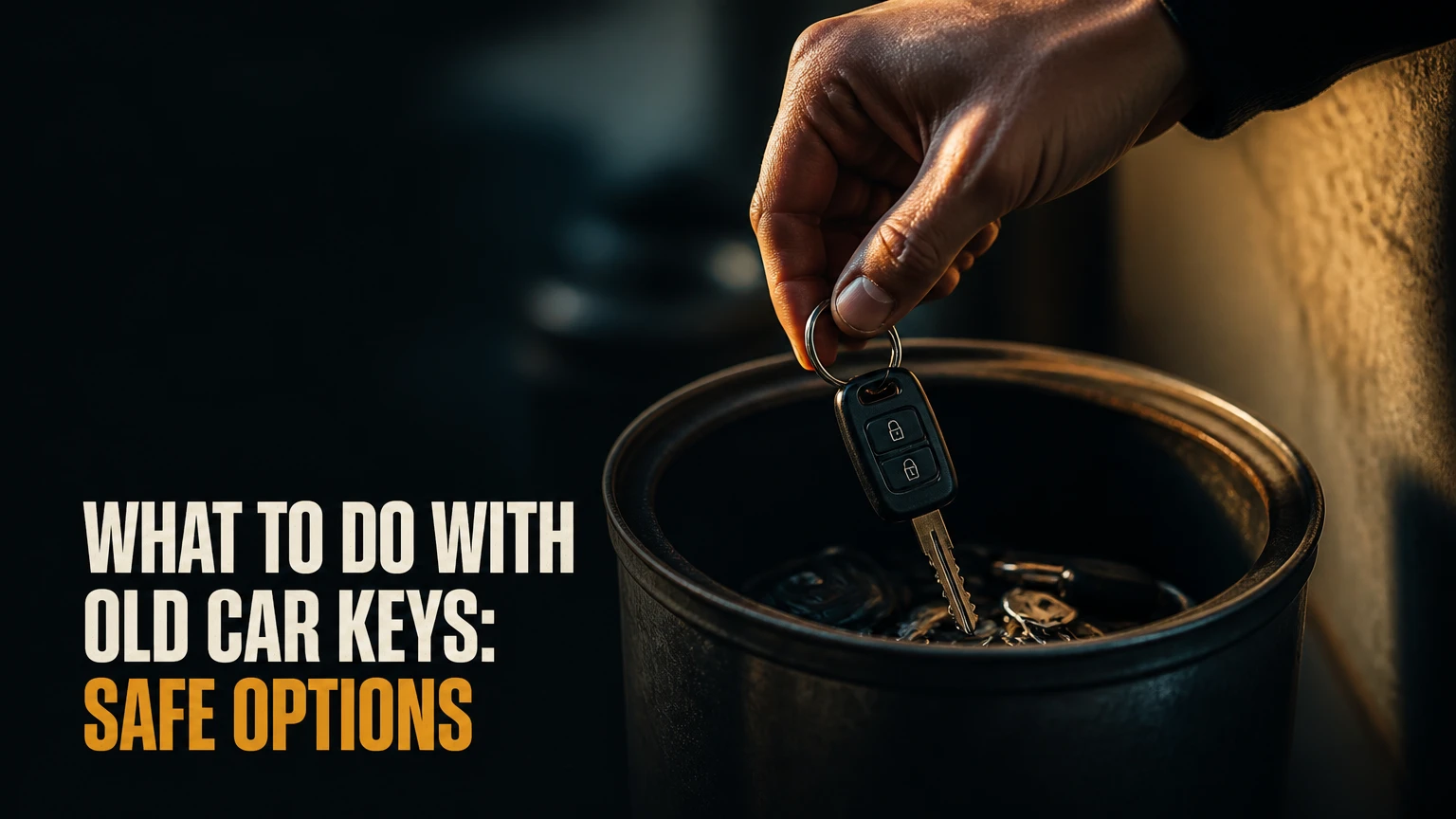
Old car keys should be handled according to their components and security status: recycle a plain metal key as scrap metal, take a key fob or transponder to an e-waste or battery program, and deactivate any key that can still access a vehicle you no longer own. Working fobs may also be sold, reused, or repaired after compatibility is verified.
Key Facts at a Glance
- A plain metal car key can usually enter scrap-metal recycling after plastic attachments are removed.
- A transponder key contains an immobilizer chip, even when the key has no buttons or visible electronics.
- A key fob battery belongs in a battery-recycling stream, not loose household trash or curbside recycling.
- Removing a battery does not erase a key from a vehicle’s access or immobilizer memory.
- A used fob is compatible only when its part number, FCC ID, frequency, vehicle system, and programming status match.
- A locksmith or dealership can usually confirm whether an old key remains enrolled in a vehicle.
What Kind of Old Car Key Do You Have?
The first step is to identify the key because a metal blade, transponder key, remote-head key, and smart fob require different handling. A plain key has no circuit board or battery, while an electronic key may contain a transponder, remote transmitter, rechargeable cell, or proximity antenna.
| Key type | Identifying features | Main components | Best next step |
|---|---|---|---|
| Mechanical key | Flat metal blade, no plastic head | Steel, brass, or nickel alloy | Scrap-metal recycling or reuse |
| Transponder key | Plastic head, usually no buttons | Blade, immobilizer chip, molded plastic | Locksmith reuse or e-waste |
| Remote-head key | Buttons plus fixed or folding blade | Battery, circuit board, chip, blade | Verify compatibility before resale |
| Smart key fob | No ignition blade, push-button vehicle | Battery, antenna, circuit board, emergency blade | Battery and e-waste recycling |
| Valet or emergency key | Narrow blade or hidden insert | Cut metal, sometimes plastic holder | Recycle or retain for the current vehicle |
| Aftermarket alarm remote | Brand label unrelated to vehicle maker | Coin cell, transmitter, buttons | E-waste after removing battery |
A thick plastic key head strongly suggests an embedded transponder, but appearance is not conclusive. Some older vehicles hide the chip in a small glass capsule, and some remote shells contain a separate immobilizer module. The owner’s manual, key part number, or an automotive locksmith provides a more reliable identification.
What does a transponder key actually do?
A transponder key authenticates the driver to the vehicle immobilizer, but it does not necessarily operate the door locks or remote functions. When the ignition reader energizes the passive chip, the vehicle compares its identifier with codes stored in the immobilizer or engine-control system; a match permits starting.
Remote buttons perform a separate function. They transmit commands for locking, unlocking, panic alarms, or trunk release, usually through a coin-cell-powered radio transmitter. A car can therefore have a key that starts the engine but has a dead remote battery, or a remote that locks doors while its transponder is not accepted for starting.
Can You Throw Old Car Keys in the Trash?
Plain metal keys are generally low-risk in household trash, but electronic fobs and loose coin-cell batteries should not be discarded that way. Sanitation equipment can crush batteries, and local waste authorities may classify lithium, rechargeable, or electronic components as household hazardous waste or e-waste.
The United States Environmental Protection Agency advises consumers, “Never put rechargeable batteries or devices powered by them in your household garbage or municipal recycling bins.” That instruction is especially relevant to rechargeable smart-key systems and damaged battery packs. Non-rechargeable CR2032 and CR2025 cells still require responsible collection because recycling rules differ by jurisdiction.
Do not place a complete fob in curbside recycling unless the local program explicitly accepts small electronic devices. Automated sorting systems may reject small mixed-material items, and a battery can create a fire risk when compacted. Check the city or county waste authority, a certified e-waste facility, or a retailer-operated battery program before dropping it off.
How Should You Dispose of an Old Electronic Key?
Electronic car keys should be separated into the battery, circuit board, plastic shell, and metal blade, then sent to the collection streams that accept each material. The process normally takes 5-15 minutes, excluding travel, and requires a small screwdriver only when the case is designed to open.
Step 1: Check whether the key is still active
If the key belonged to a vehicle you sold, donated, returned, or scrapped, treat it as a security item before treating it as waste. Ask a dealership or automotive locksmith to check whether the vehicle can delete the key from its stored access list.
A deleted key should no longer start the vehicle, but deletion behavior varies by manufacturer. Some vehicles erase one key, while others require every legitimate key to be present during a reset. Keyless-entry access and immobilizer authorization may also use separate systems.
Step 2: Remove the battery safely
Look for a battery door, a seam, a screw, or a slot exposed after removing an emergency blade. Use a plastic pry tool where possible, avoid bending the circuit board, and never puncture, crush, heat, or short-circuit a coin cell.
| Battery label | Typical application | Handling route | Important limitation |
|---|---|---|---|
| CR2032 | Many remote and smart fobs | Battery collection point | Usually non-rechargeable lithium |
| CR2025 | Slim remote fobs | Battery collection point | Similar diameter, lower capacity |
| CR2016 | Thin remotes and accessories | Battery collection point | Do not substitute without checking manual |
| VL2020 | Some rechargeable vehicle systems | E-waste or battery facility | Rechargeable chemistry requires local guidance |
| Li-ion pack | Certain advanced smart keys | E-waste or hazardous-battery program | Do not ship or trash casually |
Tape the terminals of a loose lithium battery with nonconductive tape if the collection program recommends it. Keep batteries in a dry container away from coins, keys, and other metal objects. A swollen, hot, leaking, or physically damaged cell should go directly to the local household hazardous-waste authority rather than a normal mail-back program.
Step 3: Separate the remaining materials
Remove the blade if it detaches without force. Put the circuit board and electronic module with accepted e-waste, and ask whether the facility wants the plastic shell included. Some programs accept complete small electronics, while others require batteries to be removed first.
Do not burn, grind, or drill the key shell. Besides releasing irritating fumes, those actions can damage the battery or create metal fragments. A locksmith may also recover an intact shell, button pad, or blade for repairs.
Step 4: Confirm acceptance before traveling
Ask the facility four specific questions: does it accept automotive fobs, must batteries be removed, does it accept lithium coin cells, and does it charge a drop-off fee? Typical consumer e-waste drop-offs are free, but some private programs charge $1-$5 per item or accept only quantities above a stated minimum.
Are Old Metal Car Keys Recyclable?
Old metal car keys are commonly recyclable as scrap metal, but curbside acceptance depends on the municipality. Brass and steel keys have material value, although a household handful may be too small for a scrap yard to weigh, sort, or pay for separately.
Remove rubber rings, plastic covers, electronic tags, and decorative attachments. Collect similar keys in a small metal container, then call the scrap yard or municipal recycling center about accepted alloys and minimum quantities. Never place loose keys in a commingled recycling cart unless the local instructions specifically list small metal objects.
| Recycling route | Accepts | Typical cost | Typical timing |
|---|---|---|---|
| Municipal metal drop-off | Plain steel or brass keys | Free | Same day |
| Scrap-metal yard | Sorted nonferrous keys | Free, payment varies | 10-30 minutes |
| E-waste center | Fobs and circuit boards | Free-$5 | 5-15 minutes |
| Battery retailer program | CR2032 and CR2025 cells | Usually free | 2-10 minutes |
| Locksmith | Usable shells, blades, electronics | Often free | 5-30 minutes |
| Mail-back recycler | Complete small electronics | $5-$15 shipping typical | 3-10 days |
A practical rule is to save keys until the batch is large enough to justify the trip. One key rarely produces meaningful scrap value, while a box of sorted brass may be accepted more readily. Metal value changes with commodity prices, so do not expect a fixed payment.
Should You Sell or Reuse a Working Key Fob?
Sell or reuse a working key fob only after verifying compatibility and removing personal vehicle information from the listing. A used fob can have value, but “looks identical” is not enough because radio frequency, encryption, immobilizer hardware, and programming rules can differ between model years and markets.
Record the following details before listing:
- Vehicle make, model, and model-year range.
- OEM part number printed inside or on the rear.
- FCC ID in the United States, or the equivalent regulatory identifier elsewhere.
- Button layout, blade style, frequency, and battery type.
- Whether the fob was previously programmed.
- Whether the emergency blade and transponder chip are included.
- Whether the circuit board, buttons, and shell are tested or untested.
| Reuse or resale route | Typical value | Main compatibility issue | Best buyer |
|---|---|---|---|
| Empty replacement shell | $5-$20 | Exact shell shape and button layout | DIY owner or locksmith |
| Used remote fob | $15-$75 | FCC ID, frequency, receiver system | Vehicle owner |
| Premium smart fob | $40-$150 | VIN enrollment and immobilizer limits | Locksmith or specialist |
| Uncut mechanical key | $2-$10 | Blade profile and cut depth | Key cutter |
| Damaged fob for parts | $5-$30 | Board and button condition | Repair technician |
| Locksmith trade-in | $0-$40 credit | Local inventory demand | Automotive locksmith |
Values are typical marketplace ranges, not guaranteed prices. Dealer-branded smart fobs often sell for more than shells, but they also attract compatibility disputes and may be unusable after prior enrollment. A clear “compatibility not guaranteed, verify part number before purchase” statement prevents many returns.
Can an old key fob be programmed to another car?
An old key fob can sometimes be programmed to another vehicle, but compatibility depends on the exact electronic part, vehicle platform, frequency, and whether the manufacturer permits reuse. Many proximity fobs are locked or securely enrolled to the original vehicle, so a new shell alone does not make the electronics reusable.
Remote pairing and immobilizer programming are different procedures. A vehicle owner may pair door-lock buttons through an onboard sequence, while the transponder or smart-key authorization requires security access equipment. Some manufacturers allow a locksmith to reset a used module; others require a new or virgin component.
Do not buy a used fob based only on the vehicle name. Confirm the OEM part number and FCC ID first, then ask a locksmith whether that exact unit can be erased and enrolled. Programming costs commonly range from $50-$250, while dealer replacement can reach $150-$600 or more for newer proximity systems.
What Should You Do With Keys After Selling a Car?
After selling a car, remove your personal key from the transaction only after confirming that the buyer receives every required key. If you retain a spare, ask the buyer or dealership to delete it from the vehicle’s immobilizer and remote-access memory, or arrange a documented reset before disposal.
A physical key may still unlock a door even when its transponder no longer starts the engine. Conversely, a deleted transponder key may still operate mechanical locks. Keyless vehicles can create additional exposure because an active fob may unlock doors, release the trunk, or authorize starting within the manufacturer’s security design.
For a trade-in, disclose every spare, valet key, and emergency blade. For a scrapped or stolen vehicle, contact the insurer, lender, dealership, or locksmith promptly because key deletion is only one part of recovering control. Do not publish a photograph showing a vehicle identification number, registration label, or identifying key code.
Which Disposal Method Is Best for Each Situation?
The best option depends on whether the key works, whether it remains authorized, and whether its components are separable. Deactivation takes priority when another person could use the key; recycling becomes the priority after access has been removed.
| Situation | Recommended action | Typical cost | Why |
|---|---|---|---|
| Plain metal key for a current car | Keep as emergency spare | $0 | It may still be useful |
| Plain metal key for an old car | Scrap or craft reuse | $0 | No electronic waste |
| Broken transponder key | Locksmith or e-waste | $0-$25 | Chip and blade need separate handling |
| Working fob for a sold vehicle | Delete, then sell or recycle | $0-$250 | Access risk comes first |
| Dead smart fob for a current car | Replace battery and test | $3-$15 | It may be recoverable |
| Unknown fob from a found item | Do not test on random vehicles | $0 | Avoid access and legal problems |
| Water-damaged or swollen fob | Hazardous-battery guidance | Varies | Battery damage increases risk |
| Rental or fleet key | Return to the operator | Usually $0 | Ownership and authorization remain with fleet |
A locksmith is often the best single destination when the fob is valuable, the vehicle was recently sold, or the key’s programming status is unclear. A recycling center is more appropriate when the key is broken, obsolete, or has no resale value.
Can You Repurpose Old Car Keys?
Old mechanical keys work well for low-risk crafts, while electronic fobs are better donated for parts than embedded in projects. Suitable projects include labeled hooks, wind chimes, jewelry, ornaments, and small sculpture, provided the blade is filed or enclosed so it cannot cut someone.
Clean brass or steel with mild soap and dry it fully before use. Avoid sanding or heating a key that may contain a transponder capsule. Keep any active key away from a vehicle, and do not turn a working fob into a decorative item until its access has been deleted.
Electronic fobs are poor choices for projects exposed to rain, heat, or children because the battery, circuit board, and sharp emergency blade remain hazards. Remove the battery first, and send the electronics to e-waste if the project does not require a functional transmitter.
Common Mistakes With Old Car Keys
Throwing a complete fob into curbside recycling
Small electronics and batteries can be rejected by sorting systems or damaged during compaction. Separate the battery and verify the local program instead.
Assuming a dead battery means a dead key
A depleted coin cell usually disables remote buttons, not necessarily the mechanical blade or passive immobilizer chip. Test the key only on the vehicle you own or have permission to access.
Listing a fob without its identifiers
A photograph and vehicle description cannot establish compatibility. Include the part number, FCC ID, frequency, button layout, and programming history.
Cutting or destroying a key before deactivation
Physical damage does not reliably erase stored authorization. Ask for electronic deletion first when the vehicle is no longer under your control.
Shipping loose lithium batteries
Mail carriers and recycling programs impose packaging restrictions on lithium cells. Follow the receiving program’s instructions rather than placing a loose battery in an envelope.
Treating every smart key as reusable
Some fobs can be reset, some can be cloned only through restricted procedures, and some are effectively single-vehicle components. A locksmith can identify the applicable category.
Troubleshooting Old Key Disposal Problems
What if the key fob will not open?
Remove the emergency blade and inspect the slot it occupied. Many manufacturers place a pry point there, although some cases use a small screw under a trim cover or require a plastic tool along the seam.
Do not force the case with a knife. A slip can damage the circuit board or puncture the battery. If the casing is ultrasonically sealed, a locksmith or electronics recycler may be safer than home disassembly.
What if you cannot tell whether a key contains a chip?
Treat a plastic-headed ignition key as electronic until a locksmith or manufacturer parts source confirms otherwise. A passive chip may have no battery, button, or visible circuit board, so the absence of a battery does not prove that the key is purely mechanical.
What if the scrap yard refuses one key?
Many yards set minimum quantities because individual keys weigh very little. Store the key with other accepted brass or steel items, or use a municipal metal drop-off that accepts small objects.
What if the battery is stuck?
Stop if the cell will not lift without bending or puncturing. Some holders use a retaining clip, while others require a specific release direction; the vehicle manual or a locksmith can identify the mechanism.
What if the old key belongs to a stolen or recovered vehicle?
Do not sell or reuse it until ownership and authorization are clear. Return found keys to the property owner, police, rental company, fleet operator, or dealership rather than testing them.
Expert Rules for a Safer Decision
A battery replacement is not a security reset. Changing a CR2032 restores electrical power but does not remove a fob from a vehicle’s enrollment list. Owners often confuse these two actions after selling a car.
The blade and electronics have separate value. A worn blade can make an otherwise functional fob appear defective, while a clean circuit board inside a damaged shell may still be useful to a repair specialist. Evaluate each component independently.
Compatibility beats brand recognition. Two fobs for the same Toyota, Ford, BMW, or Hyundai model may use different frequencies, transponder systems, or regional firmware. Part numbers and identifiers are more useful than a broad model label.
Retain one working spare for a current vehicle. Discarding every old key after a repair or battery failure can leave the owner dependent on an expensive dealer or emergency locksmith visit. Dispose of redundant keys only after confirming that a replacement works.
Frequently Asked Questions
How long should you keep an old car key?
Keep an old key while you own the vehicle if it is a verified spare, valet key, or emergency blade. Retain at least one tested backup for vehicles with expensive smart fobs, because replacement may cost $150-$600 and require towing or programming.
Does removing the battery make a key fob safe to sell?
Removing the battery prevents most button transmissions during storage, but it does not necessarily erase vehicle authorization or immobilizer data. Delete the fob from the vehicle first, then disclose the removed battery and programming history to the buyer.
Can a locksmith recycle an old car key?
Many automotive locksmiths accept old keys and fobs for parts, shells, blades, or responsible disposal, although policies differ. Call before visiting and ask whether the locksmith can delete the key from the vehicle as part of replacement service.
Are car keys made from brass or steel?
Car-key blades commonly use brass, nickel-plated brass, steel, or nickel silver, depending on the manufacturer and key design. Material cannot always be identified by color because plating and wear change the appearance, so ask a scrap yard before sorting a large batch.
Can an old car key unlock a different vehicle?
A mechanical key can physically fit another vehicle only when its blade profile and cut happen to match, which is uncommon. A transponder or smart key also requires the correct electronic identity and programming, so do not test an unknown key on a vehicle without authorization.
Where should you take a swollen key-fob battery?
Take a swollen, leaking, hot, or damaged battery to the local household hazardous-waste or battery-safety authority. Do not puncture, charge, mail casually, place it in water, or put it in household trash. Keep it isolated from metal objects while arranging instructions.
The Bottom Line
What to do with old car keys depends on the key’s components and whether it still controls a vehicle. Keep a tested spare for a current car, deactivate keys linked to a sold vehicle, recycle plain blades as accepted scrap metal, and route batteries and electronic fobs through battery or e-waste programs. For valuable or uncertain smart keys, an automotive locksmith is usually the safest first stop.