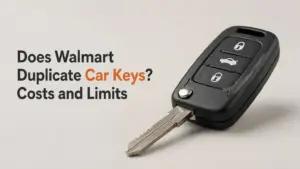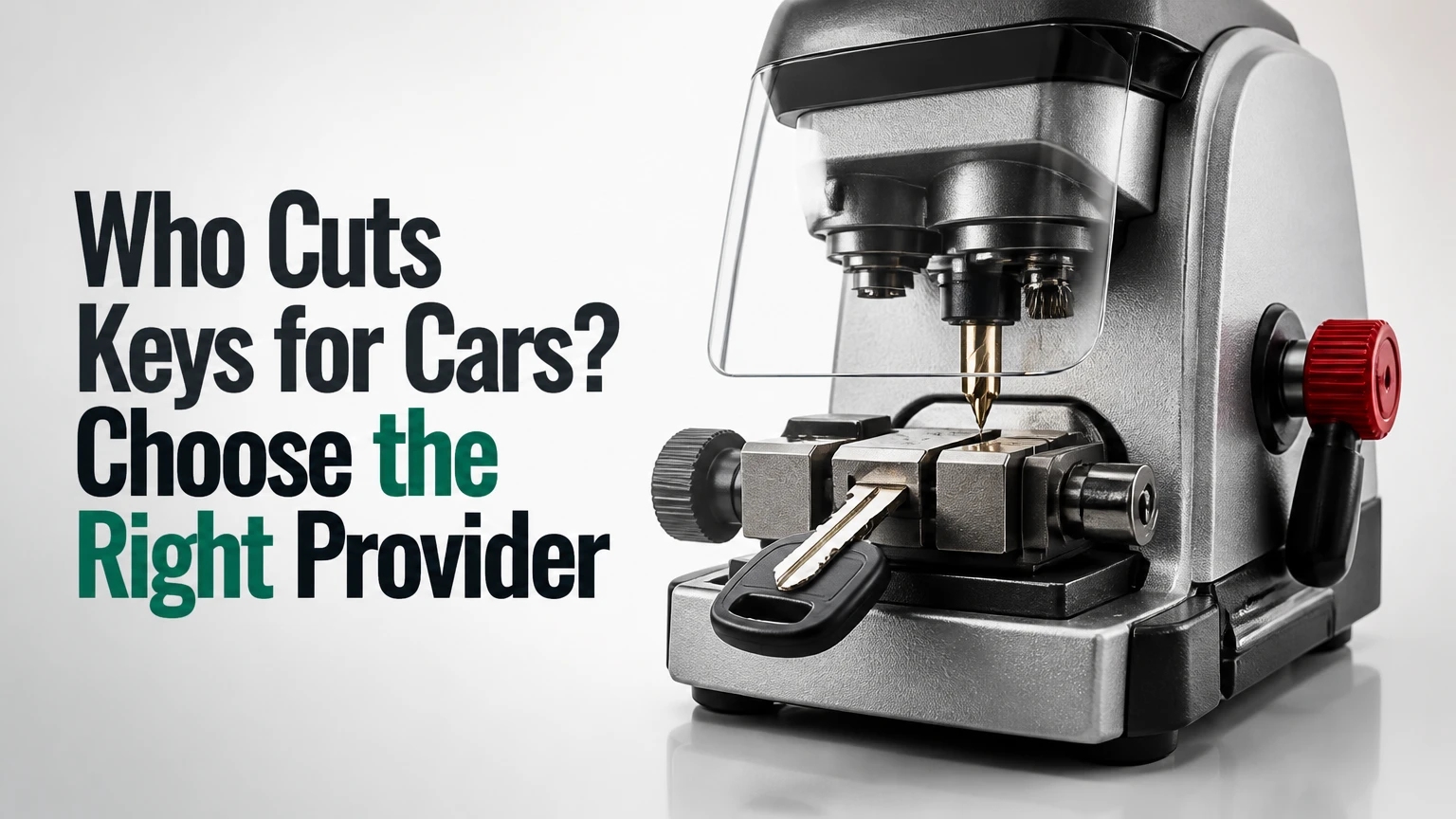
Automotive locksmiths, car dealerships, selected hardware stores, and online key retailers cut car keys, but only an automotive locksmith or dealership can reliably handle modern key cutting and immobilizer programming together. A locksmith is usually the fastest and least expensive mobile option; a dealership is often required for restricted OEM smart keys or vehicles needing manufacturer authorization.
Key Facts at a Glance
- A cut car key may open the door without starting the engine because mechanical cutting and immobilizer programming are separate functions.
- Automotive locksmiths commonly cut and program keys at the vehicle, often in 20-90 minutes depending on key type and security system.
- Hardware stores are suitable mainly for basic metal keys and some supported transponder blanks, not every push-button smart key.
- Dealerships provide OEM keys and factory systems, but their total price often includes programming, labor, and possible towing.
- A working spare is normally cheaper to duplicate than replacing every lost key because the technician can copy or clone existing data.
- The vehicle year, make, model, key type, location, and ownership evidence determine whether a provider can complete the job.
Who Cuts Keys for Cars?
The main providers are automotive locksmiths, franchised dealerships, independent repair shops with key equipment, hardware stores, and online key retailers. Provider capability varies more than the label suggests, so a hardware store may support one 2015 vehicle but reject a similar-looking key for another model.
| Provider | Typical work | Typical price | Typical time | Best use |
|---|---|---|---|---|
| Mobile automotive locksmith | Cut, clone, program, unlock, test | $80-$400 | 20-90 minutes | Lost or spare keys at home |
| Car dealership | OEM key order and factory programming | $150-$600+ | Same day to several days | Restricted or luxury systems |
| Hardware store | Metal copies and selected supported blanks | $5-$150 | 5-30 minutes | Basic keys and some older transponders |
| Independent repair shop | Limited key cutting and diagnostics | $100-$350 | 30-120 minutes | Shops with vehicle-specific equipment |
| Online key retailer | Supplies blank, remote, or fob | $20-$250 before service | 2-7 days delivery | Price-sensitive owners with a plan |
| Roadside assistance provider | Lockout help or locksmith dispatch | Membership or service fee | 30-120 minutes | Immediate access problems |
An automotive locksmith is the most versatile choice for a vehicle that is locked, immobile, or missing all keys. A dealership becomes more attractive when the manufacturer requires secure server access, a replacement fob is unavailable through independent channels, or the vehicle is covered by a key warranty.
Can a Hardware Store Cut a Car Key?
A hardware store can cut a basic edge-cut key and may duplicate certain transponder keys when its machine, blank inventory, and programming system support the exact vehicle. Hardware-store service is not universal, and staff may decline keys with sidewinder blades, encrypted chips, proximity functions, or no working original.
Take the complete key, not only a photograph, when requesting a duplicate. A standard metal blade can often be copied in minutes for approximately $5-$25, but the result will only start the vehicle if no immobilizer chip is required or if the existing electronic identity has also been transferred.
Some retail machines identify supported makes and models through a database. That database does not prove that every key for the same brand is compatible. Frequency, chip type, blade profile, remote board, and programming procedure can differ by production year and market.
Is a Locksmith Cheaper Than a Dealership?
An automotive locksmith is typically cheaper than a dealership for duplicate transponder keys, mobile replacement, and many remote fobs. A dealership may cost more because it uses OEM parts, manufacturer labor rates, secure ordering systems, and vehicle programming procedures that independent technicians may not need.
Typical total prices in the United States are shown below. These are practitioner ranges, not a national fixed price list, and metropolitan labor, emergency timing, vehicle security, and OEM parts can change the final invoice.
| Key situation | Locksmith total | Dealership total | Usual completion |
|---|---|---|---|
| Basic metal spare | $10-$40 | $50-$150 | 5-30 minutes |
| Transponder duplicate | $70-$180 | $150-$300 | 20-60 minutes |
| Sidewinder or laser-style key | $90-$250 | $200-$400 | 30-90 minutes |
| Flip remote key | $120-$350 | $250-$500 | 30-120 minutes |
| Smart proximity fob | $180-$500 | $300-$800+ | 45 minutes to several days |
| All keys lost | $200-$700+ | $350-$1,000+ | 1-4 hours or ordered service |
A quote that appears inexpensive may exclude the key shell, blade cutting, programming, travel, emergency labor, tax, or disposal of an old key. Ask whether the quoted price is the complete vehicle-ready total.
How Does Car-Key Cutting Work?
Car-key service has two separate stages: producing a blade that matches the lock and registering an electronic credential with the immobilizer system. A metal key can be mechanically perfect and still fail to start the engine when the transponder is absent, damaged, or unregistered.
Step 1: Identify the Vehicle and Key
The technician records the vehicle identification number, year, make, model, engine or trim when relevant, and the key currently available. The VIN is a 17-character identifier on most modern vehicles, but a VIN alone does not always identify the correct remote frequency or key revision.
The technician also checks whether the vehicle uses an ignition cylinder, flip blade, proximity fob, push-button start, or a separate emergency blade. Ownership evidence, such as registration and government-issued identification, is commonly required before security work begins.
Step 2: Determine the Cutting Pattern
A working key can be traced or decoded, while an all-keys-lost job may require a manufacturer key code, lock-cylinder decoding, or another authorized method. Cutting from a worn key is less reliable because years of use can reduce the original blade’s shoulders and notch depth.
A key code converts the manufacturer’s assigned pattern into cutting depths and positions. Key codes may appear on an original key-code card or service record, but many owners do not have them, and a technician may need to retrieve information through an authorized database after verifying ownership.
Step 3: Cut the Blade
Edge-cut keys use notches along one or both sides of the blade. Sidewinder keys use a milled track through the blade and usually require a code machine or CNC cutter with the correct automotive software and cutter specification.
The cutting machine must use the correct blank and calibration. A blade that looks similar may have a different shoulder position, groove profile, thickness, or transponder pocket. The technician should test the finished key in the door and ignition, when an ignition cylinder exists, before treating the mechanical portion as complete.
Step 4: Program or Clone the Electronics
Programming registers a key’s transponder or fob credential with the vehicle’s immobilizer and body-control systems. A clone duplicates compatible transponder data from a working key, while vehicle programming adds a new credential through a diagnostic procedure.
Some vehicles support owner-performed onboard programming, but the method is model-specific and may require two already-programmed keys. Many newer systems require an OBD-II diagnostic connection, security PIN, manufacturer server authorization, or a specialized tool.
EEPROM or module-level work is a specialist procedure for systems that cannot be programmed through an ordinary diagnostic route. It may involve reading immobilizer memory, bench work, or module replacement. Customers should not attempt soldering or memory modification without specialist training because a failed write can disable the vehicle module.
What Types of Car Keys Can Be Cut?
Car keys range from a simple mechanical blade to a proximity fob containing several radio and immobilizer functions. The visible shape does not reliably identify the electronic system, so a replacement should be matched by vehicle application and part number rather than appearance alone.
| Key type | Physical feature | Electronic function | Common service |
|---|---|---|---|
| Edge-cut key | Notches on blade edge | None or separate chip | Copy blade, test lock |
| Transponder key | Plastic head with chip | Immobilizer authorization | Cut and program or clone |
| Sidewinder key | Center-milled blade track | Chip may be integrated | Code cut and program |
| Flip remote key | Folding blade and buttons | Locking plus immobilizer | Cut blade, pair remote |
| Smart proximity fob | Buttons and hidden blade | Passive entry and start | Register fob, cut emergency blade |
| Valet or emergency key | Reduced-function metal blade | Usually no remote controls | Unlock or operate selected locks |
What Is the Difference Between Cutting and Programming?
Cutting creates the mechanical shape that operates a lock cylinder; programming creates the electronic permission that allows the engine-control or immobilizer system to accept the key. These services can be purchased together, but neither one automatically completes the other.
A key may fit the driver’s door and fail in the ignition because the blade is inaccurate or the ignition cylinder is worn. A key may turn the ignition and crank the starter without starting because the immobilizer rejects its transponder. A smart fob may unlock the doors while its internal start credential remains unregistered or defective.
What Information Does a Locksmith Need?
An automotive locksmith normally needs the vehicle year, make, model, exact location, key situation, and proof that the customer is authorized to receive service. The technician may also ask whether the vehicle uses a physical ignition, push-button start, remote buttons, or a hidden emergency blade.
Prepare these details before calling:
- Vehicle identification number, if safely available.
- Registration, title, insurance card, or other ownership evidence.
- Government-issued identification matching the vehicle owner or authorized driver.
- Number of working keys currently available.
- Photograph or description of the existing key, including buttons and blade.
- Exact parking location and whether the vehicle can be moved.
- Warning symptoms, such as “key turns but engine will not start.”
- Preference for OEM, aftermarket, clone, mobile, or dealership service.
Do not send a vehicle VIN and registration photograph to an unknown online seller without checking its privacy practices. Security data should be disclosed only to a verified provider with a legitimate service need.
Can an Online Seller Cut and Program a Car Key?
An online seller can supply a blank, shell, remote, or fob and may cut a blade from a key code or photograph, but online delivery rarely completes programming. The owner usually must take the part to a locksmith or dealership, and some aftermarket fobs cannot be programmed despite having the correct shape.
Online parts can reduce the hardware price when the exact part number, frequency, chip type, and vehicle application are confirmed. The apparent saving disappears if the blade is cut incorrectly, the transponder is locked, the remote uses a different frequency, or the local provider refuses customer-supplied parts.
Ask the installer these questions before ordering:
- Will you program customer-supplied parts?
- Which FCC ID, OEM part number, or chip type is required?
- Is the fob new, refurbished, unlocked, or previously paired?
- Does the price include emergency-blade cutting?
- What happens if the part fails programming?
- Does the replacement carry a parts warranty?
A replacement shell is different from a replacement electronic fob. A shell transfers buttons and housing, while the original circuit board and transponder remain in use.
Which Provider Should You Choose?
The best provider depends on whether the vehicle is mobile, whether a working key exists, how advanced the security system is, and whether OEM authorization is required. Mobile automotive locksmiths usually win for urgent service and ordinary makes; dealerships are safer for restricted systems, warranty work, and some luxury vehicles.
| Situation | First choice | Why | Second choice |
|---|---|---|---|
| Working metal key, older vehicle | Hardware store | $5-$25 copy in minutes | Automotive locksmith |
| Working transponder key | Automotive locksmith | Cutting and cloning in one visit | Supported hardware retailer |
| One key remaining | Automotive locksmith | Lower-cost spare before emergency loss | Dealership |
| All keys lost at home | Mobile locksmith | No tow, onsite cutting and programming | Dealership with tow |
| European luxury smart key | Dealership or specialist locksmith | Secure authorization and compatible software | Brand specialist |
| Broken shell, electronics work | Locksmith or electronics specialist | Transfer board and cut blade | Online shell plus local cutting |
| Vehicle under key warranty | Dealership | Warranty documentation and OEM part | Insurer-approved locksmith |
When Is a Dealership the Better Choice?
A dealership is the better choice when the vehicle needs a restricted OEM smart key, the manufacturer requires server authorization, the vehicle has an active warranty, or an independent locksmith cannot verify compatible programming coverage. Dealership service may also be preferable when the customer wants documented OEM provenance for a new or high-value vehicle.
A dealership is not automatically the best choice for every replacement. Older vehicles, ordinary transponder keys, and many mainstream models can often be completed by a qualified locksmith without towing, while dealership ordering may add several days.
When Is a Mobile Locksmith the Better Choice?
A mobile automotive locksmith is the better choice when the vehicle is locked, parked away from a dealership, missing all keys, or needed quickly. A properly equipped technician can bring a key machine, diagnostic programmer, battery support, and replacement blanks to the vehicle.
Verify coverage before dispatch. Ask for the exact year, make, model, key type, all-in price, arrival fee, parts warranty, and whether ownership verification is required. A generic “we do all cars” answer is weaker than confirmation of the specific immobilizer system.
What Should You Check Before Paying?
Test every function before the technician leaves: mechanical operation, ignition authorization, remote locking, trunk release, panic button, proximity entry, and emergency-blade operation. A replacement is incomplete if the engine starts but the remote battery compartment is damaged or the emergency blade cannot unlock the driver’s door.
Use this acceptance checklist:
- The blade turns smoothly without excessive force.
- The engine starts repeatedly, not only once.
- The immobilizer warning light behaves normally after startup.
- Lock, unlock, trunk, and panic buttons respond from the expected distance.
- Proximity entry works on the permitted doors.
- The emergency blade opens the vehicle.
- The invoice identifies the part, service, programming, and warranty.
- The original key remains functional unless deletion was specifically requested.
One practitioner rule prevents many repeat visits: test the new key while the original key is still available. If a programming attempt fails, the technician can compare the replacement with a known-good credential instead of diagnosing two unknowns.
What Problems Happen After a Key Is Cut?
The most common post-service failures are an unprogrammed transponder, an incompatible fob, a worn lock cylinder, a poorly decoded blade, or a weak remote battery. The symptom identifies the failed layer, so describe exactly what the key does rather than reporting only that it “does not work.”
| Symptom | Likely cause | First check | Typical remedy |
|---|---|---|---|
| Door opens, engine will not start | Unprogrammed or wrong chip | Immobilizer light and spare key | Program compatible transponder |
| Remote works, engine will not start | Separate start credential failed | Start with emergency procedure | Reprogram or replace fob |
| Key fits but will not turn | Wrong cut or worn cylinder | Compare with original key | Decode, recut, or repair cylinder |
| Key turns but sticks | Worn ignition wafers | Try a code-cut key | Inspect or replace cylinder |
| Buttons do nothing | Dead battery or wrong frequency | Install specified battery | Replace battery or fob |
| Proximity start fails intermittently | Weak fob battery or antenna issue | Use emergency start position | Replace battery, diagnose vehicle |
| New key deletes old key | Limited key-memory capacity or procedure | Test every old key | Re-add retained keys |
A remote battery powers buttons, but many transponder chips receive power inductively from the vehicle and do not depend on that battery during normal starting. Replacing the coin cell therefore may restore locking without solving an immobilizer problem.
What Mistakes Increase the Cost?
Waiting until every key is lost usually costs more than making a spare while one working key remains. All-keys-lost work may require vehicle entry, key-code retrieval, immobilizer resets, security access, and additional travel, making a typical invoice two or more times the cost of a simple duplicate.
Avoid these mistakes:
- Copying a visibly worn key instead of requesting a code cut.
- Ordering a fob by appearance without checking its part number and frequency.
- Assuming a remote battery and transponder chip perform the same function.
- Choosing the lowest phone quote without confirming programming and travel fees.
- Leaving an old key untested after adding a replacement.
- Attempting module or EEPROM work without a backup and specialist equipment.
- Failing to ask whether lost keys should be erased from the vehicle’s memory.
A clone key is not always equivalent to a newly programmed key. Cloning may be economical for a supported transponder, but some vehicles require each key to receive a separate credential, and a clone may not provide every remote or proximity function.
How Long Does Car-Key Service Take?
A basic metal duplicate typically takes 5-10 minutes, a transponder key takes 20-45 minutes, and a smart-fob replacement takes 30-90 minutes when the correct part is available. Dealership orders can take one to several business days when the key must be shipped or security approval is delayed.
Time increases when all keys are lost, the vehicle battery is discharged, the lock is damaged, the key code is unavailable, or the vehicle uses encrypted programming. A mobile locksmith may complete service at the parking location, while a dealership may require towing before diagnosis and programming.
FAQ
Can a locksmith make a car key without the original?
A qualified automotive locksmith can often make a key without the original by retrieving an authorized key code, decoding a lock, or using vehicle-specific programming equipment. The technician still needs the vehicle identity and proof of authorization. Some restricted smart-key systems require dealership ordering or manufacturer server access.
Can a car key be cut from the VIN?
A VIN can help an authorized locksmith or dealership identify the vehicle and retrieve a compatible key code, but the VIN is not itself a complete cutting pattern. Production changes, trim differences, regional parts, and security restrictions can require additional information before cutting or programming.
Does a new car key need to be programmed?
A new car key needs programming when the vehicle uses an immobilizer transponder, remote credential, or proximity fob. A purely mechanical key may only need cutting. A remote that locks the doors can still require separate immobilizer programming before the engine will start.
Can roadside assistance replace a lost car key?
Roadside assistance may dispatch a locksmith, unlock the vehicle, or reimburse part of a replacement, but coverage depends on the membership and policy. Many plans pay for lockout entry rather than the key, blade cutting, programming, or OEM fob. Confirm the benefit limit before authorizing work.
Should I buy an OEM or aftermarket car key?
Buy an OEM key when factory compatibility, warranty documentation, or restricted programming matters most. A reputable aftermarket key can reduce cost for supported vehicles, but verify the exact part number, FCC ID, frequency, transponder type, and installer warranty before purchase. The cheapest listing is a poor choice without those checks.
The Bottom Line
For most drivers, a qualified mobile automotive locksmith is the practical answer to who cuts keys for cars because the technician can cut, program, and test the replacement at the vehicle without a tow. Use a hardware store for a simple supported metal key, and choose a dealership when the vehicle requires restricted OEM authorization, warranty handling, or specialist luxury-car programming.
Get a complete quote, provide ownership evidence, identify whether a working key remains, and test every function before payment. Making a spare before the last key disappears is the most reliable way to control both cost and downtime.