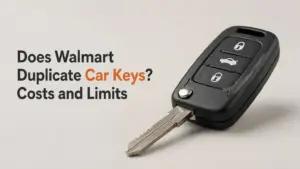
Duplicating a car key typically costs $10-$500 or more in the United States, with the final price determined by the key’s technology, vehicle security system, provider, and location. A basic metal key may cost $10-$25, while a programmed transponder, remote-head key, or proximity fob commonly costs $50-$500.
Key Facts at a Glance
- A working original key usually makes duplication cheaper than replacing a completely lost key.
- A basic mechanical car key commonly costs $10-$25 and takes 5-15 minutes to cut.
- A transponder key typically costs $50-$150 because cutting alone does not authorize engine starting.
- A remote-head key often costs $100-$200, including the blade, buttons, and electronic pairing.
- A proximity smart key commonly costs $200-$500 or more, especially through a dealership.
- A key that unlocks the doors but does not start the engine has a programming or immobilizer problem, not necessarily a cutting problem.
How Much to Duplicate a Car Key?
The typical cost to duplicate a car key is $10-$500+, but the practical price depends more on the key system than on the vehicle’s age alone. A metal key needs only accurate cutting, whereas a modern key may require a compatible transponder, remote-frequency pairing, immobilizer authorization, and a hidden emergency blade.
The following United States price ranges are typical consumer estimates, not fixed national rates. Parts availability, vehicle location, after-hours service, ownership verification, and whether the original key works can change the invoice.
| Key situation | Typical total price | Typical completion time | Main price drivers |
|---|---|---|---|
| Metal mechanical key | $10-$25 | 5-15 minutes | Key blank, cutting accuracy |
| Basic transponder key | $50-$150 | 20-40 minutes | Chip type, programming method |
| Laser-cut or sidewinder key | $100-$250 | 30-60 minutes | High-security blank, code cutting |
| Remote-head key | $100-$200 | 20-45 minutes | Buttons, blade, remote pairing |
| Proximity smart key | $200-$500+ | 30-90 minutes | Fob source, immobilizer access, model |
| Lost-all-keys service | $150-$1,000+ | 1-4 hours | Vehicle access, decoding, towing, security reset |
A quoted “key price” may exclude programming, cutting, mobile travel, emergency labor, sales tax, or a diagnostic fee. Ask for the complete installed price before authorizing work.
What Does Car Key Duplication Mean?
Car key duplication creates an additional functioning key from an existing operational key. Car key replacement usually means creating a key when the original is damaged beyond use or all keys are missing, which can require vehicle decoding, immobilizer enrollment, lock-code retrieval, or towing.
The distinction affects both price and risk. With one working key, a technician can often identify the blade profile and add a new key to the vehicle’s authorized-key list. With no working key, the technician must establish the correct mechanical code and obtain security access without relying on a functioning reference.
A spare key is therefore preventive maintenance. Making one before the last key disappears usually reduces the number of diagnostic steps and avoids emergency service charges.
Which Factors Change the Duplication Price?
Vehicle key duplication costs rise when the new key contains more independent systems. The technician may need to produce a mechanical blade, identify an immobilizer chip, pair a radio remote, and enroll a proximity fob separately.
Key technology
| Technology | What the key must do | Typical parts and service | Common limitation |
|---|---|---|---|
| Mechanical blade | Turn door and ignition locks | $10-$25 | Does not bypass an immobilizer |
| Transponder key | Authenticate with immobilizer | $50-$150 | Engine will not start if chip is absent |
| Laser-cut blade | Match high-security sidewinder profile | $100-$250 | Ordinary duplicators may not cut it |
| Remote-head key | Operate locks and start vehicle | $100-$200 | Buttons and chip may require separate pairing |
| Proximity fob | Unlock and authorize push-button start | $200-$500+ | Model-specific programming is common |
| Integrated smart key | Handle proximity, remote, and backup blade | $250-$600+ | OEM fob and security access can dominate cost |
Vehicle year is only a rough indicator. Some late-1990s vehicles use inexpensive transponder systems, while certain older luxury models use high-security keys and proprietary programming. The make, model, year, trim, and market determine compatibility.
Original-key condition
A new key cut from a severely worn original may reproduce the wear rather than the correct factory dimensions. The result can be a key that works intermittently, sticks in the cylinder, or turns the lock but cannot be removed smoothly.
A locksmith can sometimes decode the lock or cut the replacement by the manufacturer’s key code instead. Code cutting is usually more accurate when the source blade has rounded edges or visibly shallow grooves, although obtaining the code may require proof of ownership or manufacturer access.
Provider and location
A hardware store may offer the lowest price for a metal key, but many locations cannot program immobilizer chips or proximity fobs. An automotive locksmith generally offers broader mobile capability, while an authorized dealer is more likely to have original equipment parts and factory security access.
After-hours, rural, airport, and roadside calls can add a travel or emergency fee. A shop-based quote and a mobile quote are not directly comparable unless both include labor, programming, cutting, and taxes.
How Does a Locksmith Duplicate a Car Key?
A professional duplication normally involves identification, mechanical cutting, electronic enrollment, and functional testing. The process may take 5-15 minutes for a metal key or 30-90 minutes for a programmed smart key, depending on vehicle access and software authorization.
Step 1: Identify the vehicle and key system
The technician records the vehicle identification number, make, model, year, trim when relevant, and current key type. The technician also checks whether the original key starts the engine, operates the locks, and communicates with the vehicle.
A visual inspection alone is not sufficient for many modern keys. Two fobs can share a similar shell while using different transponder chips, radio frequencies, board layouts, or immobilizer protocols.
Step 2: Decode or measure the blade
A mechanical duplicator can trace a suitable original, but code cutting is preferable when the original blade is worn. Laser-cut keys require the correct high-security profile and machine setup; an ordinary edge-cut blank cannot substitute for a sidewinder blank.
You should verify the key profile before the technician cuts the final blank. A wrong profile can waste the blank and create a key that appears finished but cannot enter the ignition cylinder.
Step 3: Cut the replacement blade
The cutter reproduces the required groove or side cuts on a compatible blank. The technician deburrs the blade and checks it in the door lock or ignition without forcing it.
A correct mechanical cut proves only that the blade fits and turns. It does not prove that the immobilizer will authorize the engine.
Step 4: Clone or program the electronics
Some older transponder systems permit chip cloning from a working key. Other vehicles require the technician to connect a diagnostic programmer through the OBD-II port or use a manufacturer-approved security procedure to enroll the new key.
Remote-lock pairing and engine immobilizer programming are separate functions on many vehicles. A remote can lock and unlock the doors while its immobilizer chip remains unrecognized.
Step 5: Test every function
The completed key should be tested in the driver’s door, ignition or start system, remote buttons, trunk release where applicable, and engine-start sequence. The technician should also confirm that the security indicator behaves normally after starting.
Do not accept a spare based only on button operation. Door access, engine authorization, remote range, and emergency-blade fit each provide different evidence of a successful duplication.
Where Should You Duplicate a Car Key?
The best provider depends on the key type, urgency, vehicle security system, and need for an original equipment part. Hardware stores suit simple mechanical keys, automotive locksmiths usually provide the best balance for common transponder systems, and dealerships become more attractive when proprietary programming or an OEM fob is required.
| Provider | Typical price for simple key | Typical price for smart key | Best capability | Main drawback |
|---|---|---|---|---|
| Hardware store | $10-$35 | $50-$150 where offered | Metal and selected chip keys | Limited model coverage |
| Automotive locksmith | $50-$300 | $150-$500+ | Mobile cutting and programming | Capability varies by vehicle |
| Authorized dealership | $75-$250 | $250-$700+ | OEM parts and factory systems | Higher labor and appointment cost |
| Online part plus local programming | $20-$200 for part | $80-$400 for part | Potential parts savings | Compatibility and programming risk |
Are hardware stores suitable?
Hardware stores are suitable when the vehicle uses a plain mechanical blade or when the specific store confirms support for the exact transponder system. They are usually unsuitable for encrypted proximity fobs, unusual laser profiles, or keys requiring security-code access.
A low cutting price does not guarantee a usable spare. Ask whether the quoted service includes chip programming and whether the store will test engine starting rather than only the blade.
Is a locksmith cheaper than a dealership?
An automotive locksmith is often cheaper than a dealership for common vehicles because the locksmith can supply aftermarket or equivalent keys and combines cutting with mobile programming. The difference narrows when the vehicle requires a restricted OEM fob, online manufacturer authorization, or a security reset.
Call two providers with identical information. Compare the total price, key brand, programming charge, warranty period, arrival fee, and whether the technician can work with your exact year and trim.
When is the dealership the safer choice?
A dealership is the safer choice when the manufacturer restricts key enrollment, the vehicle has a complex European security module, the key must be ordered by VIN, or an aftermarket fob has already failed. Dealer service can also be appropriate when maintaining an OEM warranty or obtaining a documented factory part matters more than price.
The dealership is not automatically required for every BMW, Mercedes-Benz, Audi, Toyota, or Ford. Model-year security architecture varies, so confirm capability with an independent locksmith before assuming dealer-only service.
Can You Buy and Program a Car Key Yourself?
You can sometimes buy a compatible blank or fob and complete programming yourself, but success depends on the vehicle’s procedure and whether the car permits owner programming. Some vehicles allow remote-button synchronization but still require a diagnostic tool or security authorization to enroll the immobilizer.
| DIY situation | Possible owner action | Typical extra cost | Main risk |
|---|---|---|---|
| Plain metal key | Buy a compatible blank and have it cut | $5-$20 | Wrong profile or poor cut |
| Remote battery replacement | Install the specified coin cell | $3-$10 | Damaged contacts or wrong polarity |
| Remote resynchronization | Follow the owner’s manual sequence | $0 | Remote may pair without starting engine |
| Transponder enrollment | Use supported vehicle procedure or programmer | $30-$250 | Immobilizer lockout or erased keys |
| Used smart fob | Verify exact part and reset status | $50-$300 | Locked, incompatible, or non-resettable unit |
Online listings often combine visually identical shells with incompatible electronics. Check the FCC ID where applicable, part number, frequency, transponder type, button layout, blade profile, and vehicle compatibility before purchase.
A locksmith may refuse to program a customer-supplied fob because the part could be defective, previously locked to another vehicle, or incorrectly advertised. The cheapest part can become the most expensive route after cutting and failed programming charges.
What If the Original Key Is Damaged or Worn?
A damaged key should be duplicated before it stops working, provided the blade and electronics remain identifiable. A sticky ignition, cracked shell, weak buttons, or intermittent remote signal can indicate separate mechanical and electronic faults.
Use the following diagnostic distinction:
- The blade will not enter or turn: inspect the profile, cuts, ignition cylinder, and key wear.
- The blade turns but the engine will not start: test the transponder and immobilizer enrollment.
- The remote does not operate: replace the battery and test the remote board or pairing.
- The smart key works inconsistently: check the fob battery, antenna range, vehicle battery, and stored fault codes.
- The original key is cracked: transfer electronics only when the replacement shell is designed for that board.
A worn key can damage an ignition cylinder if the driver repeatedly forces it. A code-cut replacement may solve the key problem, but it will not repair a worn cylinder or an immobilizer fault.
What Happens If You Lose the Last Working Key?
Losing the last working key changes the job from duplication to key replacement and often increases both price and completion time. A technician may need to unlock the vehicle, decode the mechanical system, retrieve security data, program a new key, and remove missing keys from the authorized list.
| Situation | Typical price | Typical time | Likely extra requirement |
|---|---|---|---|
| One working key available | $50-$500 | 20-90 minutes | Compatible blank or fob |
| Damaged but readable key | $75-$500 | 30-120 minutes | Shell, battery, or code cut |
| All keys lost, common vehicle | $150-$600 | 1-3 hours | Vehicle access and programming |
| All keys lost, luxury vehicle | $400-$1,000+ | 2-4 hours or appointment | OEM security authorization |
| Dealer replacement by VIN | $250-$700+ | Same day to several days | Ownership documents and ordered part |
Some vehicles erase previously registered keys when a new enrollment procedure is used, while others require explicit deletion of missing keys. Ask the provider how the vehicle’s authorized-key list will be handled.
How Can You Avoid Paying for the Wrong Key?
The most reliable quote includes vehicle identity, existing-key status, required functions, and a complete installed price. Send the provider a photograph of the front and back of the key, but do not publish the vehicle identification number or key-security data publicly.
Ask these questions before booking:
- Does the quote include the key blank or fob, cutting, programming, labor, travel, and tax?
- Will the replacement start the engine, or does the price cover remote buttons only?
- Is the part OEM, aftermarket, refurbished, or customer-supplied?
- Can the technician support the exact make, model, year, trim, and market?
- What ownership documents are required?
- What warranty covers a failed key, failed programming, or defective buttons?
- Will the hidden emergency blade be cut and tested?
- Will the technician verify that the new key is stored in the vehicle?
Keep at least two functioning keys when possible. Some vehicles have maximum key counts, and certain programming procedures can remove an existing key if the technician enters the wrong mode.
What Are the Most Common Duplication Failures?
Most failed car-key copies result from an incorrect part, a worn source key, incomplete programming, or confusing remote operation with engine authorization. Troubleshooting should begin by identifying which function failed rather than repeating the entire duplication process.
| Symptom | Most likely cause | Correct next action | Typical resolution |
|---|---|---|---|
| Key will not turn | Incorrect or worn blade | Compare profile and cut by code | Recut blade or repair cylinder |
| Key turns but engine stays off | Unprogrammed transponder | Run immobilizer diagnostic test | Enroll compatible chip |
| Buttons work, engine will not start | Remote paired, chip not enrolled | Program immobilizer separately | Add transponder authorization |
| Engine starts, buttons fail | Remote battery or pairing issue | Test battery and remote frequency | Replace battery or resynchronize |
| Smart fob works near vehicle only | Weak fob battery or antenna issue | Measure range and inspect battery | Replace battery or diagnose vehicle |
| Emergency blade does not unlock door | Wrong blade profile or cut | Test mechanical lock directly | Recut or replace blade |
Expert insight: cloning is not universal
A working key does not guarantee that its electronic code can be copied onto another chip. Some systems permit cloning, while others require a new identity to be enrolled through the vehicle’s immobilizer procedure.
Expert insight: remote frequency is not enough
A matching radio frequency can make a fob appear compatible because the buttons operate the locks. Engine authorization uses a separate immobilizer function on many vehicles, so button success cannot confirm a complete duplicate.
Expert insight: the final key is the expensive key
Owners often postpone duplication because the existing key still works. That decision removes the easiest reference key and can convert a short appointment into an all-keys-lost service involving access, decoding, and security programming.
How Long Does Car Key Duplication Take?
Car key duplication takes approximately 5-15 minutes for a mechanical blade, 20-60 minutes for a conventional programmed key, and 30-90 minutes for a proximity fob. Waiting for an OEM part, obtaining security authorization, correcting a wrong online part, or repairing the vehicle can extend the appointment.
The fastest service occurs when the vehicle is present, the original key starts the engine, the owner has identification and registration, and the provider has the correct blank or fob in stock. A dealership may require several business days when the key must be ordered by VIN.
Mobile service saves towing time but may include a travel charge. Ask whether the stated arrival window is separate from the estimated cutting and programming time.
What Information Should You Give for an Accurate Quote?
Provide the vehicle’s make, model, year, trim, location, key count, and current key functions. The most important distinction is whether at least one key starts the engine, because a working ignition key usually places the job in the duplication category.
Include these details:
- Exact vehicle make, model, and model year
- Push-button start or physical ignition
- Metal blade, transponder key, remote-head key, or smart fob
- Whether the current key starts the engine
- Whether door locks, trunk release, and remote buttons work
- Number of existing keys
- Whether the service is mobile or shop-based
- Whether you need an OEM part or accept a compatible aftermarket key
- Your city or postal code
- Whether the key is needed during regular hours
A provider that gives a precise quote without asking about the vehicle and key type may be quoting only a blank, not a completed working duplicate.
FAQ
Does car insurance pay for a duplicate key?
Most standard auto insurance policies do not pay for an ordinary spare key because duplication is preventive maintenance. Coverage may apply under roadside assistance, comprehensive coverage, rental reimbursement, or a dedicated key-protection benefit after theft or loss, subject to the policy deductible and limits. Check the declarations page before ordering service.
Can AutoZone or another parts store make a car key?
Some parts stores can cut selected metal, transponder, or remote keys, but availability depends on the exact vehicle and store equipment. Parts-store service may not support every immobilizer or proximity system. Confirm that the quoted service includes programming and engine-start testing, not only blade cutting or remote-shell replacement.
Is a duplicate key the same as a replacement key?
A duplicate key is an additional key made while a functioning key remains available. A replacement key restores access after damage or loss and may require decoding, security enrollment, or deletion of missing keys. Providers often charge less for duplication because the working key supplies a mechanical and electronic reference.
Can a locksmith make a car key without the original?
An automotive locksmith can often create a key without the original, but the job becomes an all-keys-lost replacement rather than a simple duplicate. The locksmith may need the VIN, proof of ownership, vehicle access, lock decoding, and a compatible security programmer. Luxury and newer vehicles may require dealer or manufacturer authorization.
Should I replace the car key battery before duplicating it?
Replace a weak remote or smart-fob battery when the buttons have short range, work intermittently, or stop responding. Battery replacement does not create a duplicate and does not repair an unprogrammed transponder. The engine-start chip is generally separate from the coin-cell-powered remote functions, although the exact design varies by vehicle.
How many spare car keys should I have?
Most owners should keep at least two functioning keys, including the primary key and one accessible spare. Households sharing a vehicle may need one per regular driver, while a business fleet should maintain a controlled spare according to its key-management policy. Store the spare away from the vehicle and test it periodically.
The Bottom Line
The answer to how much to duplicate a car key is usually $10-$25 for a metal key, $50-$150 for a transponder key, $100-$200 for a remote-head key, and $200-$500 or more for a proximity fob. An automotive locksmith is often the practical choice for common programmed keys, while a hardware store fits simple blades and a dealership fits restricted OEM or proprietary systems.
Request an installed-price quote using the make, model, year, key type, and working-key status. Duplicate the key before losing the last working one, and test the blade, remote, immobilizer, and emergency function before considering the job complete.